







For lawn enthusiasts, maintaining a perfectly pristine green lawn is no easy feat. Slippery lawns and complex terrain often render traditional lawn mowers ineffective. This is why all-wheel drive (AWD) technology has expanded from off-road vehicles to garden machinery.
This guide will answer the most crucial questions about AWD lawn mowers and help you decide: Is an AWD lawn mower worth the investment for your beloved lawn?
What is an AWD lawn mower?
An AWD (All-Wheel Drive) lawn mower refers to a model where power is simultaneously transmitted to all wheels. This structure significantly enhances the mower's traction in complex terrain, making it a professional-grade solution for tackling steep slopes, wet turf, and uneven yards.
How does an AWD lawn mower work?
The core logic of AWD lies in Dynamic Traction Management. Unlike 2WD models that rely on a single drive axle, an AWD mower uses a sophisticated drivetrain or independent motors to synchronize all four wheels.
The core mechanics of the AWD lawn mower:
- Torque Distribution: The system continuously monitors wheel resistance. If one wheel loses grip on a patch of wet moss or loose soil, power is instantly redistributed to the wheels with the most traction, preventing the "spinning in place" common in 2WD mowers.
- Center of Gravity Optimization: AWD machines are engineered with balanced weight distribution, ensuring that downward pressure remains constant on all four contact points, which is crucial for maintaining a straight path on cross-hills.
Which is better 4WD or 2WD?
Choosing between 2WD and 4WD isn't simply a matter of which technology is "better," but rather about selecting the appropriate tool based on the specific conditions of your terrain. Here is the performance comparison:
- 4WD (Four-wheel drive): The undisputed king of stability. It excels in "low-traction" conditions. Because all four wheels provide power, even starting on an incline won't cause slippage or damage to the lawn.
- 2WD (Two-wheel drive): Generally divided into front-wheel drive (FWD) (suitable for flat ground) and rear-wheel drive (RWD) (suitable for gentle slopes). While capable, it relies on weight distribution for traction; if the drive wheels lose contact or traction, the lawnmower will stop operating.
Continue reading: FWD VS RWD VS AWD Lawn Mowers
What lawns benefit most from an all wheel drive lawn mower?
Although all-wheel-drive lawn mowers are powerful, their advantages are most noticeable on the right type of terrain. If your lawn matches any of the conditions below, an AWD mower can turn mowing from a demanding task into a much easier one:
- Steep slopes: a clear example is lawns with gradients above 20% (approximately 11°). Two-wheel-drive mowers often struggle on such inclines, losing traction or sliding backwards. By contrast, all-wheel-drive mowers provide consistent uphill grip, allowing them to climb smoothly without stopping.
- Wet or moss-prone lawns: in regions such as Ireland or western Norway, where Atlantic moisture keeps grass frequently damp, all-wheel drive is particularly important. It helps prevent wheel spin and reduces the risk of leaving muddy tracks or ruts on the lawn.
- Uneven or irregular terrain: lawns with hidden dips, exposed tree roots, or old wheel ruts can easily cause two-wheel-drive mowers to lose contact with the ground and become stuck. All-wheel drive (AWD) ensures continued movement as long as one or more wheels maintain ground contact.
- Large lawns with multiple obstacles: on sloping sites that require frequent manoeuvring around flower beds, trees, and garden features, four-wheel drive offers improved stability, steering control, and overall handling.
- Soft or sandy soil: on loose ground with naturally low traction, all-wheel drive distributes both weight and power more evenly across the mower, helping to prevent sinking, wheel spin, or bogging down.
Buying an AWD robot lawn mower vs hiring professional mowing services
Many homeowners are hesitant: should I invest in a robot lawn mower, or simply pay for professional lawn care services? Let's compare these two options from cost, quality, and lifestyle.
- Cost: Hiring a professional typically costs between €40 and €100 per visit. Over the course of a year, this can easily add up to several thousand euros. By comparison, a standard robotic lawn mower costs around €2,000 upfront but can be used for 8–10 years. Ongoing expenses are minimal, limited mainly to electricity consumption and occasional blade replacements, meaning the investment can pay for itself within just a few seasons.
- Convenience: With a robotic lawn mower, you have full control over mowing schedules. Professional services, on the other hand, require advance booking and coordination around service availability.
Over the long term, purchasing a robotic lawn mower represents a cost-effective and practical investment, especially for homeowners with complex yards.
Main types of all-wheel drive lawn mowers
Although all AWD lawn mowers use the same four-wheel-drive principle, they differ significantly in design and operating method. The three main types are outlined below:
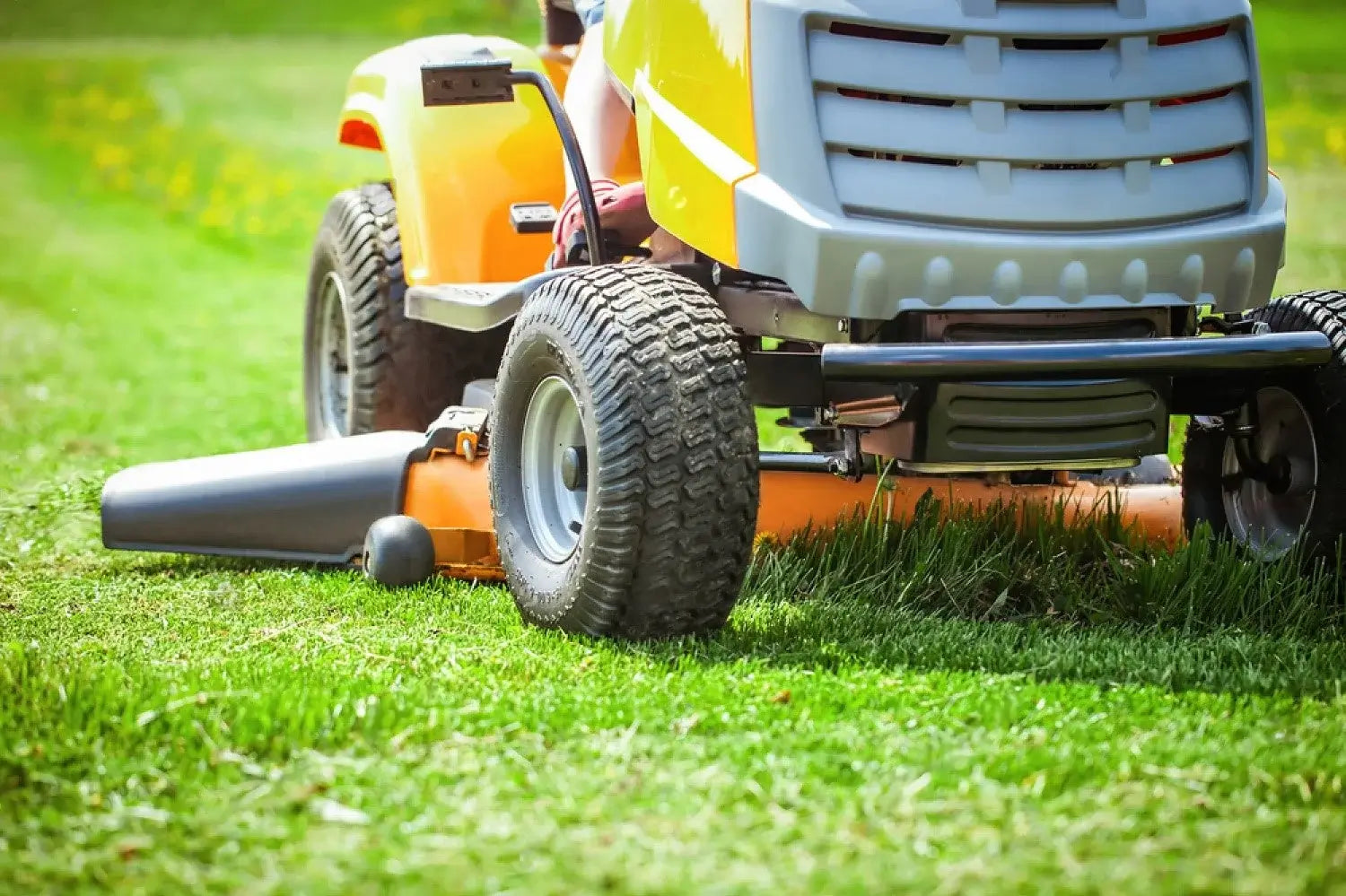
- All wheel drive push mower: in this category, the all-wheel-drive system powers the mower forward, while the operator walks behind and controls direction and speed.
- All wheel drive ride-on lawn mowers: often referred to as garden tractors, these machines are designed for large lawns and properties. The operator sits on the mower during operation.
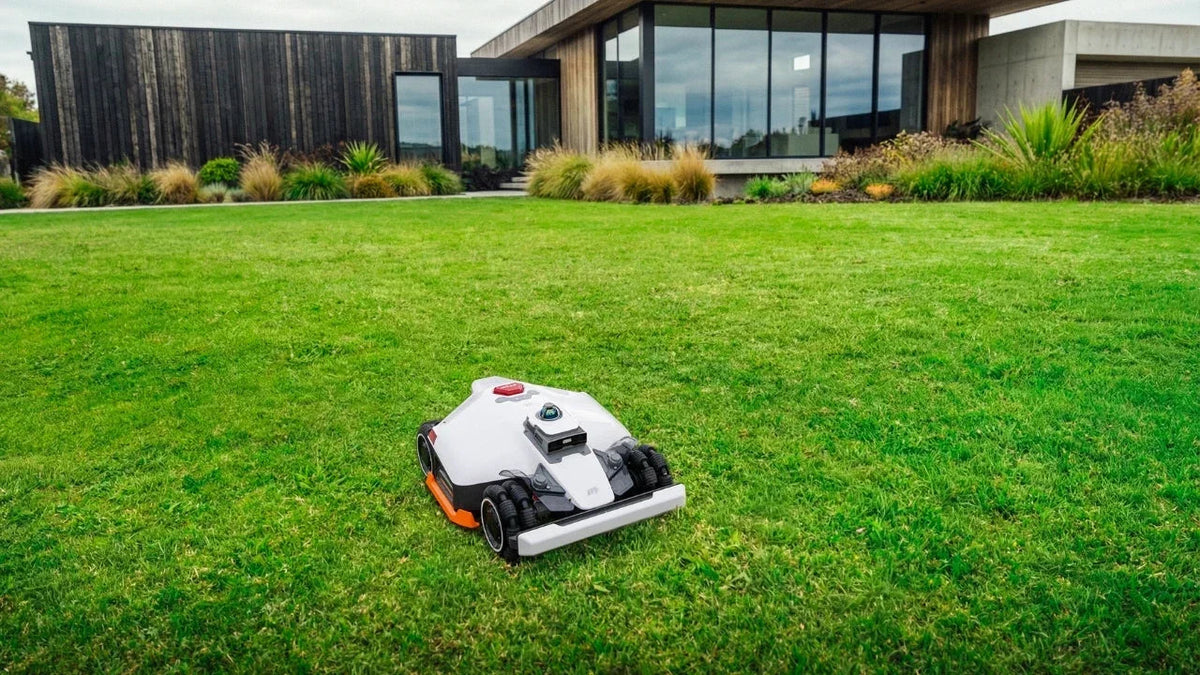
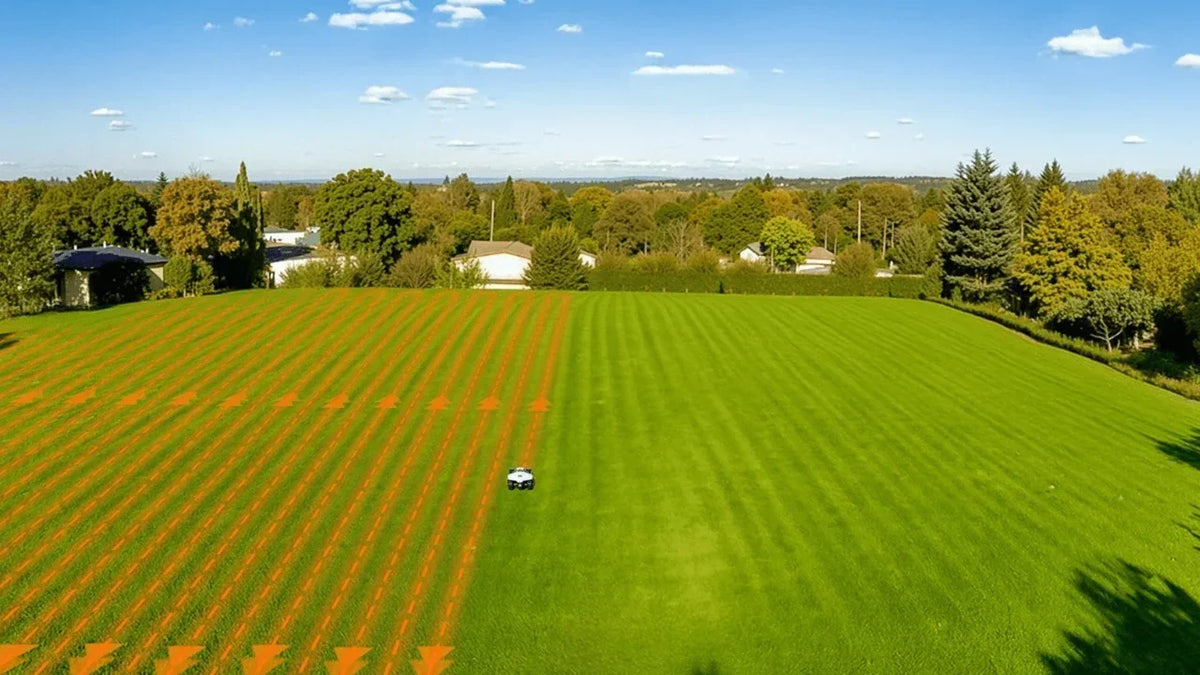
- All wheel drive robot lawn mowers: the most advanced option. These robots operate fully autonomously, are battery-powered, and use sensors together with GPS (or RTK) technology for navigation.
Key Features to Look for in an AWD Lawn Mower
If you’ve decided that an all wheel drive lawn mower fits your lawn’s needs, the next step is knowing what features to prioritise.
- Tire Design: Prioritize deep-tread or oversized wheels.
- Engine Power (Torque): Ensure the engine is at least 160cc to handle the added weight of the AWD system and thick, wet grass.
- Cutting Efficiency: Opt for a minimum 21-inch deck with a single-lever height adjustment for all four wheels.
- Maneuverability: Look for variable speed settings or swivel control to offset the extra weight when navigating tight corners.
- Durability: Seek out steel decks and high-quality bearings; avoid models with excessive plastic components.
- Drive Control: Choose variable speed triggers or smart torque systems that adapt to changing terrain and inclines.
Mammotion AWD Lawn Mower Lineup
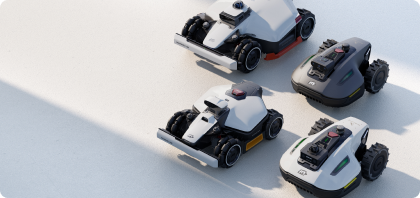
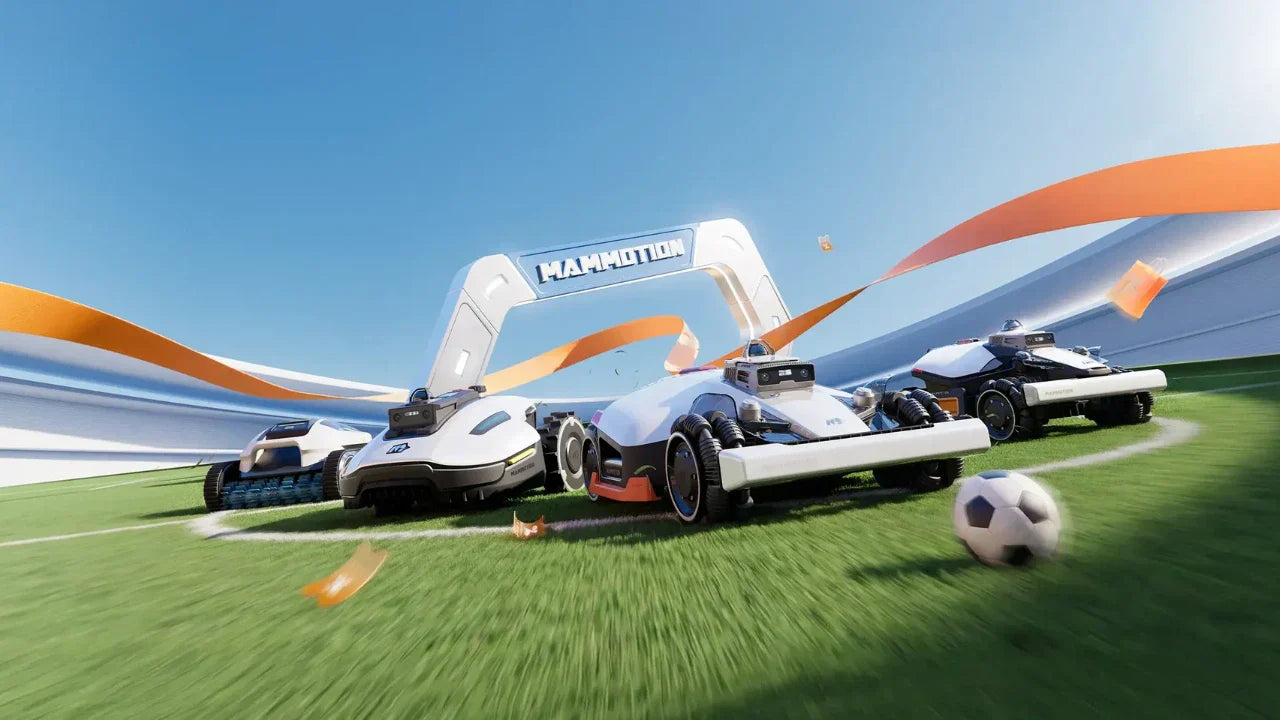
As a leader in the field of all-wheel drive robot lawn mowers, Mammotion has expanded its signature "all-terrain power" to meet the needs of lawns of all sizes. Below are the four core AWD models currently available.
LUBA 3 AWD Series: The 2026 Flagship Benchmark
As Mammotion's most powerful flagship model to date, the LUBA 3 AWD is a professional-grade solution for large lawns with rugged and complex terrain. The series won the Best of Innovation Award at CES 2026 and has been named the "Best Robotic Lawn Mower of 2026" by leading media outlets such as CNET and TechRadar. It is not just a display of raw power, but the pinnacle of intelligent mowing technology.
Key Highlights:
- World's leading Tri-Fusion Positioning powered by 360° LiDAR, NetRTK, and AI Vision, maintaining ±1cm positioning accuracy even in weak signal areas like dense forests or high-building clusters.
- Dual 165W motors deliver high cutting efficiency of up to 500 m²/h.
- Advanced 10-Trillion-Ops AI with 300+ obstacle avoidance and Smart Cliff Shield.
- All-Wheel Drive for slopes up to 80% (38.6°).
- Adjustable cutting height tailored to multiple grass types.
- Smart app control for up to 50 mowing zones.

LUBA Mini 2 AWD Series: The Compact All-Terrain Expert
Launched in 2026, LUBA Mini 2 AWD condenses flagship-level core power into a compact body designed specifically for small to medium-sized complex lawns. It utilizes upgraded Triple-Camera AI Vision + NetRTK fusion technology to achieve more flexible obstacle avoidance within a wire-free deployment.
Key Highlights:
- Tri-Camera AI Vision + NetRTK. It provides centimeter-level precision mapping and a wider field of view.
- Zero-Setup Multi-Zone Auto Mapping. Up to 10 Zones.
- Detects 2.5×2.5 cm Obstacles. AI-Powered Smart Avoidance.
- Smart Battery Management. Custom Limits + Off-Peak Charging.

LUBA 2 AWD Series: The Classic Masterpiece
The LUBA 2 series has been a market staple since its 2024 debut, with an upgraded 2026 version recently released. Inheriting the classic dual-blade disk design and benefiting from deep software algorithm optimizations, it remains the most cost-effective high-performance AWD choice on the market.
Key Highlights:
- Auto mapping with UltraSense AI Vision.
- Enhanced object recognition & safety powered by an AI algorithm.
- Industry's top 5000㎡/day performance with 400mm dual cutting disc.
- 3D lawn printing, your lawn's "Tattoo".

LUBA mini AWD LiDAR: The Entry-Level Choice for Small Complex Gardens
LUBA mini AWD LiDAR, designed for small gardens under 1,500㎡, this model offers a highly compelling AWD experience. It is one of the few products on the market to bring professional-grade 3D LiDAR to an entry-level size, effectively solving the pain point of "positioning loss" in obstructed environments.
Key Highlights:
- Skip the Setup. Ready to use out of the box.
- The world's leading solid-state LiDAR robotic mower.
- Fusion Precision: 3D LiDAR + Vision.
- Operates reliably in all lighting conditions.

Below is the comprehensive comparison table for the four Mammotion AWD models, organized by their core specifications and target use cases:
| Feature | LUBA 3 AWD 1500㎡ | LUBA 3 AWD 3000㎡ | LUBA 3 AWD 5000㎡ | LUBA mini 2 AWD 1000㎡ | LUBA 2 AWD 3000㎡ | LUBA 2 AWD 5000㎡ | LUBA mini AWD LiDAR |
|---|---|---|---|---|---|---|---|
| Price | €2,299.00 | €2,699.00 | €3,199.00 | €1,499.00 | €2,099.00 | €2,499.00 | €1,699.00 |
| Lawn Size | 1500 ㎡ | 3000 ㎡ | 5000 ㎡ | 1000 ㎡ | 3000 ㎡ | 5000 ㎡ | 1500 ㎡ |
| Navigation | 360° LiDAR + Dual-Camera AI Vision | 360° LiDAR + NetRTK + Dual-Camera AI Vision | 360° LiDAR + NetRTK + Dual-Camera AI Vision | Triple-Camera AI Vision + NetRTK | Mammotion iNavi (NetRTK + Vision) | Mammotion iNavi (NetRTK + Vision) | 3D LiDAR + RTK + Vision |
| Multi-zone | 15 | 30 | 50 | 10 | 30 | 50 | 20 |
| Battery | 9.4 Ah | 12 Ah | 15 Ah | 6.1 Ah | 12 Ah | 12 Ah | 6.1 Ah |
| Cutting Width | 400 mm | 400 mm | 400 mm | 200 mm | 400 mm | 400 mm | 200 mm |
| Motor Power | 88 W | 165 W | 165 W | 88 W | 165 W | 165 W | 88 W |
| Efficiency | 400 ㎡/h | 500 ㎡/h | 500 ㎡/h | 350 ㎡/h | 500 ㎡/h | 600 ㎡/h | 100 ㎡/h |
From the perspectives of navigation accuracy, lawn mowing efficiency, and cost-effectiveness, the LUBA 3 AWD is a more suitable choice. For more detailed specifications, please visit the comparison page.
AWD Lawn Mower Maintenance Tips
Like any high-performance machine, all-wheel-drive lawn mowers require regular maintenance to operate smoothly. Proper care not only extends the mower’s service life but also ensures consistent performance over time.
- Blade sharpening: it is recommended to sharpen the blades at least once per season. Dull blades tear grass rather than cutting it cleanly, which can cause yellowing at the tips and place additional strain on the drive system. For AWD robotic mowers, small blade discs should be inspected regularly and replaced as needed to maintain optimal cutting efficiency.
- Oil and air filter replacement: because AWD mowers drive all four wheels, engine load is typically higher than on two-wheel-drive models. Always change the engine oil at the intervals specified in the user manual to ensure proper lubrication. In addition, keep the air filter clean to prevent dust from entering the engine, which can lead to reduced power output or overheating.
- Winter storage: before the cold season begins, thoroughly clean grass clippings from the underside of the mower to prevent corrosion. For petrol-powered models, either drain the fuel tank or add a fuel stabiliser. For robotic mowers, store both the mower and charging station in a dry, frost-free environment, and charge the battery to at least 50% to help preserve battery health.
Following these maintenance practices can reduce repair costs and maximise the lifespan of your lawn mower.
conclusion
AWD technology is not merely a performance upgrade, it is a definitive solution for complex and demanding environments. If your garden features challenging terrain, AWD is one of the most sensible investments you can make.
Did you like this article? Add us as a preferred source to find us more easily on Google.

Leave a comment
This site is protected by hCaptcha and the hCaptcha Privacy Policy and Terms of Service apply.