



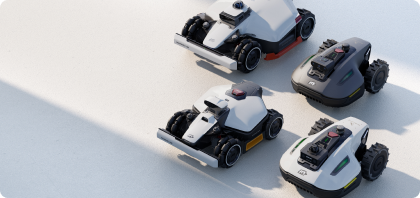

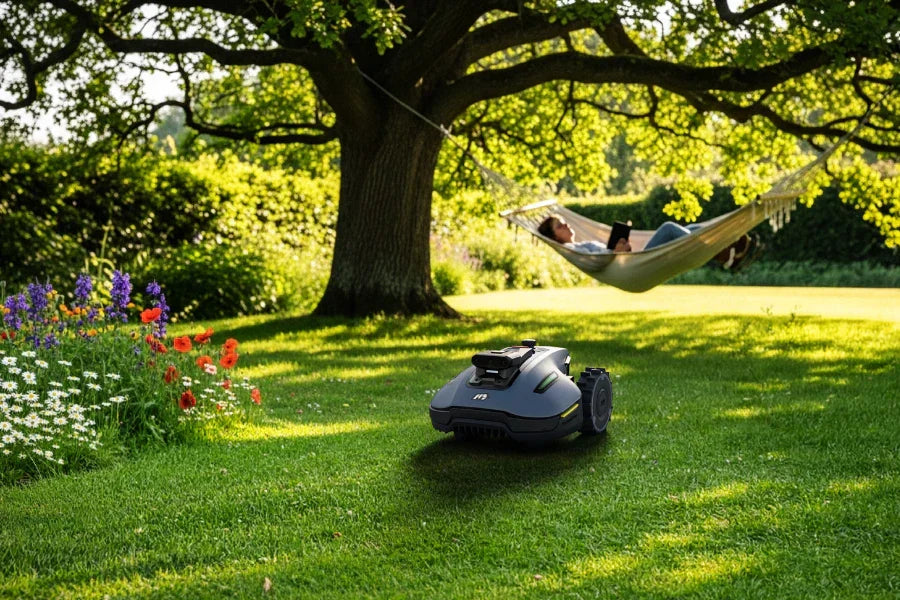
Are you looking for the best robotic lawn mower for a small lawn? In this guide, we will discuss how to choose the right robot mower for small gardens under 800 m², ensuring you get a perfectly manicured lawn without any of the hard work.
Benefits of using a robot mower for small gardens
A compact robotic lawn mower can bring numerous positive changes to both you and your smaller garden, including:
- Saving time and money on lawn maintenance and improving your quality of life.
- The fine grass clippings left by the robot mower act as a natural fertiliser, promoting a healthier lawn.
- Quiet operation that won’t disturb your family or your neighbours.
- Fully electric design, energy-saving and environmentally friendly.
- Effortless mowing in hard-to-reach narrow passages and corners, ensuring the entire lawn looks sharp and well-kept.
By choosing a modern lawn care solution, you aren't just investing in a machine; you are investing in a more beautiful home and a more comfortable daily routine.
Factors that matter when selecting a robotic mower for small garden
Before purchasing a robotic lawn mower, there are several essential factors to weigh up, such as cutting capacity and garden terrain. Here are eight vital questions you should ask yourself before choosing a model for your small lawn:
1. Does your garden have many narrow passages?
Many smaller plots feature tight gaps between house walls, hedges, or flower beds. Check if the robot is agile enough to navigate these confined spaces smoothly without getting stuck or leaving patches of uncut grass.
2. Are there steep slopes or uneven terrain?
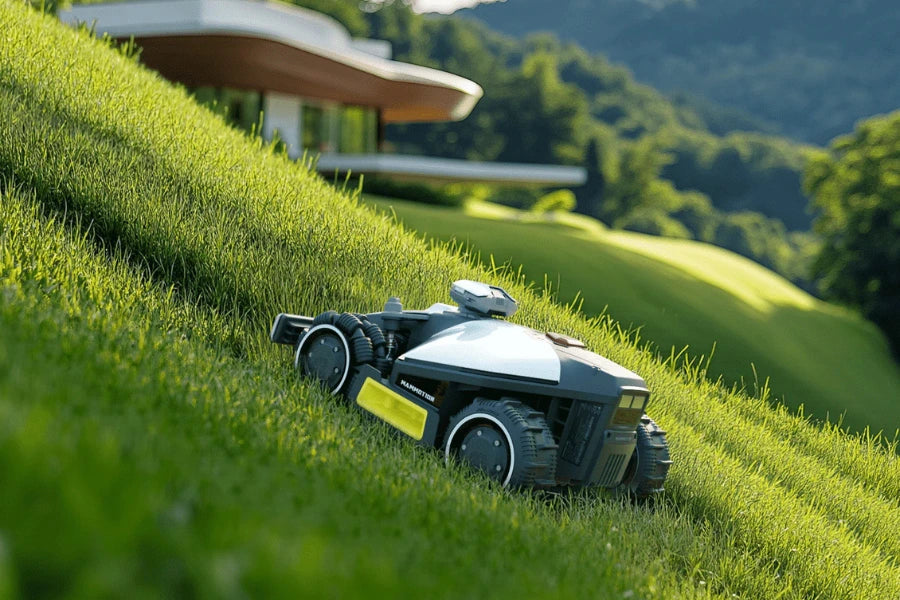
Even a small plot can have significant inclines or dips in the turf. Check the robot’s maximum climbing ability (in degrees) and ensure it has enough grip to handle uneven ground without slipping.
3. Do you prefer a wire-free or boundary wire installation?
Do you want to avoid digging and burying cables? Small wire-free robot mowers utilise modern technologies such as LiDAR, RTK, or AI cameras for navigation, which significantly simplifies the initial set-up.
4. Do you need remote control via a smart app?
Would you like to be able to start, pause, or adjust mowing schedules directly from your phone? App control offers complete freedom to manage your lawn care from anywhere, greatly enhancing the overall user experience.
5. Why is edge-cutting important?
Are you tired of tidying up the edges manually with a grass trimmer? Look for a model with a dedicated edge-cutting feature, where the blades extend further towards the side to ensure a perfect finish along walls and garden borders.
6. How much space do you have for winter storage?
Across much of Europe, robot mowers must be stored indoors during the winter months. Is space limited in your garden shed or garage? If so, consider a compact, space-saving model that is easy to store and move.
7. Does the noise level matter to you and your neighbours?
Do you live in a terraced house or a densely populated residential area? Check the decibel (dB) rating. A major advantage of small robots is their exceptionally low operating noise.
8. What smart features and obstacle detection do you need?
Does your lawn often have garden furniture, toys, or pets on it? If so, ensure your robot is equipped with advanced obstacle detection sensors (anti-collision) so it can navigate safely and smoothly around objects.
Features to look for when buying a robotic mower for small garden
When selecting the best robotic lawn mower for a small lawn, the technical specifications will determine how much effort you actually save. Here are the core features to focus on:
1. High-Precision Positioning and Navigation
In smaller gardens, which often feature nearby walls or tall trees, high-precision navigation is essential. These are the most common positioning solutions for robot mowers:
LiDAR
- How it works: 360° LiDAR scanning generates a real-time point cloud, using 3D-SLAM to directly position the mower and map the garden.
- Pros: Unaffected by lighting or time of day; highly sensitive in detecting small obstacles (twigs, toys, pets); maintains centimetre-level accuracy over long distances.
- Cons: Higher manufacturing costs and requires sophisticated algorithms.
AI Vision (Camera-based)
- How it works: Uses image data from cameras combined with AI algorithms for real-time perception, obstacle avoidance, and path planning.
- Pros: Cost-effective, offers precise obstacle avoidance, and is very user-friendly.
- Cons: High demand on processing chips; performance can be affected by extreme lighting or poor weather conditions.
RTK (Satellite-based)
- How it works: The robot and a base station both receive satellite signals, calculating the difference in real-time to achieve centimetre-level positioning.
- Pros: Extremely accurate; easy to set up the base station (via network RTK or a home station); proven technology for efficient path planning on open lawns.
- Cons: Satellite signals can be lost under roof overhangs or thick tree canopies; requires initial calibration of the station/antenna position.
Boundary Wire (Traditional)
- How it works: A low-voltage perimeter wire is buried around the lawn. The mower detects electromagnetic signals to stay within bounds and moves using a gyroscope with random or semi-planned patterns.
- Pros: Mature technology, simple hardware, and the lowest initial cost; unaffected by weather or light.
- Cons: High installation effort and cost; random paths are less efficient; difficult to modify boundaries once installed.
A multi-fusion positioning system is the most reliable choice. Mammotion excels in integrating LiDAR, AI Vision, and NetRTK technologies. Whether it is a compact city garden or a sprawling lawn, Mammotion provides smart solutions for every environment.
The Mammotion YUKA mini 2 800, for example, combines a Triple-camera AI Vision system with NetRTK, allowing it to perform perfectly in both bright sunlight and low-light conditions. It offers centimetre-level mapping and positioning, ensuring even the most complex garden layouts are precisely managed.

2. Edge-Cutting
Many robots leave a wide strip of uncut grass near borders and walls. Choose a model with a dedicated edge-cutting feature, where the blade positioning is engineered to reach as close to the machine's side as possible. This minimises the need for manual grass trimmers, saving you both time and effort.

3. Virtual Boundaries (Wire-Free)
For a modern and seamless set-up, setting virtual boundaries via an app is the superior choice. With a small wire-free robot mower, you eliminate the need to bury boundary wires. This also makes it incredibly easy to adjust the mowing area if you add a new flower bed or install a trampoline.
4. Advanced Obstacle Detection and Anti-Collision
In smaller gardens, outdoor furniture, toys, and flower pots are often placed closely together. Anti-collision features—typically using ultrasonic sensors or AI cameras—allow the robot to decelerate and steer around obstacles rather than bumping into them. This protects both the robot and your garden belongings.

5. Agility in Narrow Passages
A defining characteristic of small gardens is the presence of narrow corridors between different lawn sections. The robot must have the right software logic or physical design to navigate these passages smoothly, avoiding getting stuck or "giving up," ensuring the entire lawn is thoroughly maintained.

6. Smart App Control
A feature-rich app puts all controls in the palm of your hand. Beyond setting mowing schedules, you can digitally adjust the cutting height. Premium models even allow you to select mowing patterns (such as horizontal or vertical stripes) or "write" designs on your lawn for a personalised touch.
7. Multi-Zone Management
Is your front garden separated from the rear? With multi-zone functionality, you can programme the robot to travel across a path or through a gate to mow different areas of the garden at different times, providing comprehensive management of your entire property.

8. Anti-Theft Protection
As a robotic mower is a significant investment, anti-theft protection is essential. Choose a model equipped with security features such as instant mobile notifications if the mower leaves its designated area, and the ability to track its location remotely via your smartphone.
The Best Robotic Mower for Small Gardens – Mammotion YUKA mini 2 800
After exploring all the technologies and features, one thing is clear: choosing the right machine is essential for enjoying your leisure time to the fullest. If you are looking for the perfect combination of compact design and market-leading intelligence, the Mammotion YUKA mini 2 800 is undoubtedly the best choice for small lawns.
- Triple-Camera AI Vision. Centimeter-Precise Navigation
- DropMow — Quick & Easy
- 1-Minute Multi-Zone Auto Mapping
- 300+ Obstacles Detected in Real Time
- Intelligent Edge Cutting. No Missed Spots
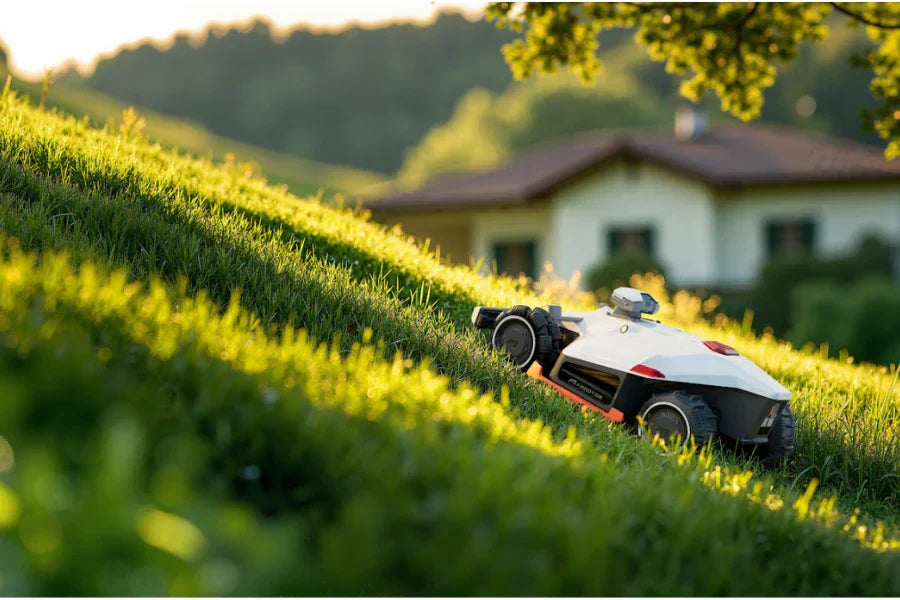
- Handles 45% Slopes Effortlessly
- Upgraded AI Chip. Smarter & Safer Mowing
👉 Click here to learn more about the Mammotion YUKA mini 2 800




Leave a comment
This site is protected by hCaptcha and the hCaptcha Privacy Policy and Terms of Service apply.