






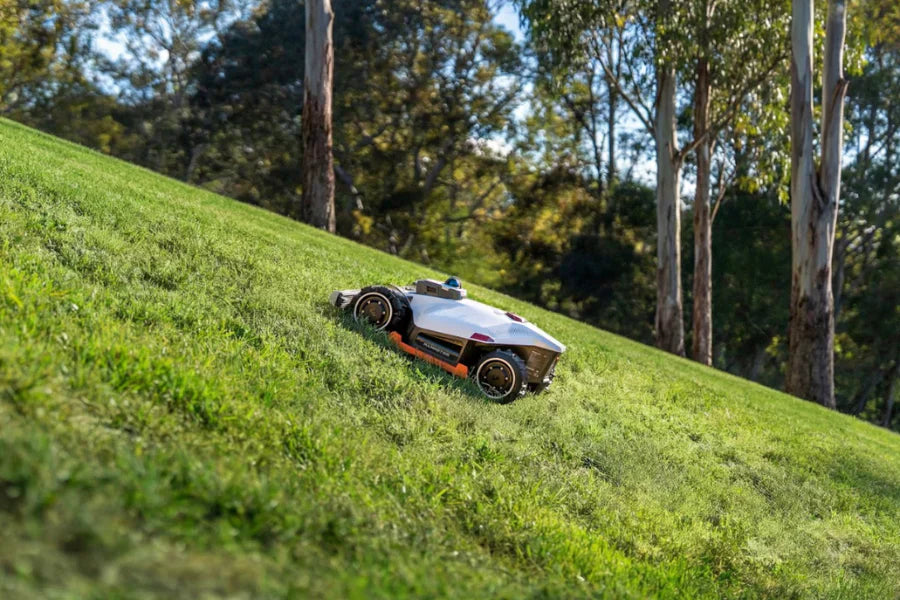
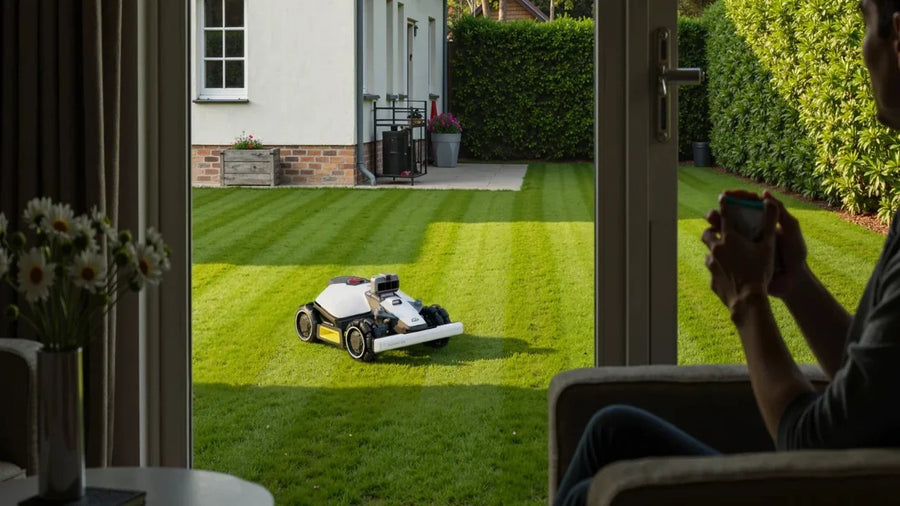
Robotic lawn mowers have become the go-to choice for many homeowners, turning lawn care into a simple, fully automated task. However, for those with steep slopes, rugged hills, or uneven ground, finding a machine that can actually handle the incline is a common challenge.
Not all mowers are created equal when it comes to gravity. If you’ve been searching for the best robot mower for hills, you know that traction and stability are non-negotiable. In this guide, we’ll take a deep dive into the technology behind robotic mowers for steep slopes and introduce you to a solution designed to conquer even the most demanding terrains.
Why Do Standard Robot Mowers Struggle on Slopes?
Mowing a flat, level lawn is a straightforward task for almost any machine. However, as the incline increases, robot lawn mowers for hills face several complex technical hurdles that standard models simply aren't equipped to handle:
1. Lack of Traction and Side-Slipping
Most standard models rely on two-wheel drive (2WD). On a steep slope, the friction provided by just two wheels is often insufficient. This leads to wheels spinning in place or, worse, the mower sliding sideways. Not only does this leave the grass uncut, but it can also cause "turf burn" or significant damage to your lawn’s surface.
2. Uneven Cutting Height
On rugged or undulating ground, a mower with a rigid chassis or short wheelbase can easily get "bottomed out." This results in "scalping"—where the blades cut too deep into mounds—or leaving patches of long grass in dips. For a robotic mower for steep slopes to be effective, it must be able to follow the contours of the land.
3. Battery Strain and Heat Buildup
Climbing requires significantly more power than horizontal movement. When a standard motor is forced to work at maximum capacity on a steep hill, it generates excessive heat. Over time, this constant strain can lead to overheating, shortened battery life, and a dramatic reduction in overall mowing time per charge.
4. Stability and Centre of Gravity
Without a purpose-built balanced design, simpler robots run a high risk of tipping backwards or losing steering control as the centre of gravity shifts during a climb. Maintaining "ground hug" is essential for any robot mower for hills to ensure safety and performance.
5. Signal Obstruction and Navigation
Hilly landscapes often create "dead zones" where the terrain itself blocks signals between the mower and its base station or satellites. A reliable robotic lawn mower for hills needs advanced, multi-source navigation technology to maintain its position even when the line of sight is obstructed by ridges or slopes.
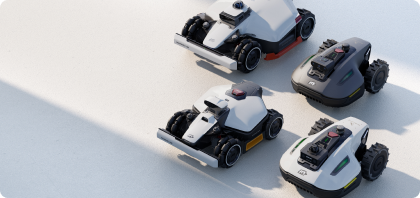
Best Robot Lawn Mower for Steep Slopes - Mammotion LUBA 3 AWD Series
Mammotion’s latest flagship for 2026, the LUBA 3 AWD series, is engineered to conquer any terrain—whether it’s a gentle incline, a steep slope, or rugged, mountainous ground. Let’s take a look at why it’s so impressive:
AWD Mastery: The LUBA Standard for All-Terrain Performance
The LUBA 3 AWD series features an advanced All-Wheel Drive system, offering superior performance compared to standard robotic mowers. While traditional machines struggle with traction, the LUBA 3 is built for unstoppable off-road performance.
By equipping all four wheels with dedicated power units, the mower gains exceptional ground grip and precise control. Thanks to this AWD capability, the mower can effortlessly climb slopes of up to 80% (38.6°), making it the best robot mower for steep slopes on the market today.

Advanced Suspension for Ultimate Stability
To deliver a perfect cut on uneven ground, a mower needs more than just raw power—it needs chassis precision. The LUBA 3 AWD is equipped with an innovative, advanced suspension system that acts as a "shock absorber" for your lawn.
This technology, combined with a low centre-of-gravity design, ensures the machine maintains maximum contact with the ground at all times. This doesn't just provide stability on steep hills; it prevents the mower from tipping or losing its course when encountering dips or mounds. The result is a consistent, professional-grade cut, even in the most challenging environments.

Adaptive Blade System for Rugged Landscapes
Beyond its driving power, the LUBA 3 AWD features an intelligent cutting system specifically designed for complex terrain. Powered by dual 165W high-torque motors and a six-blade disc, it offers surgical precision.

Working in harmony with the AI vision system, the LUBA 3 automatically adjusts blade speed and motor power based on grass density. On rugged slopes where grass often grows unevenly, this ensures the cut remains powerful without wasting energy. With an adjustable cutting height of 25–70mm, it easily manages taller grass in hard-to-reach areas, ensuring your entire garden stays perfectly manicured.

Wireless Navigation and Intelligent Path Planning
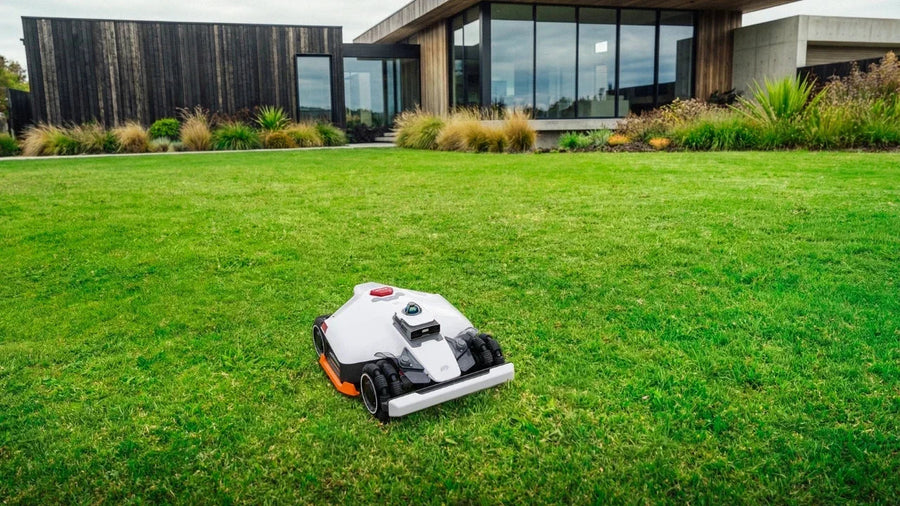
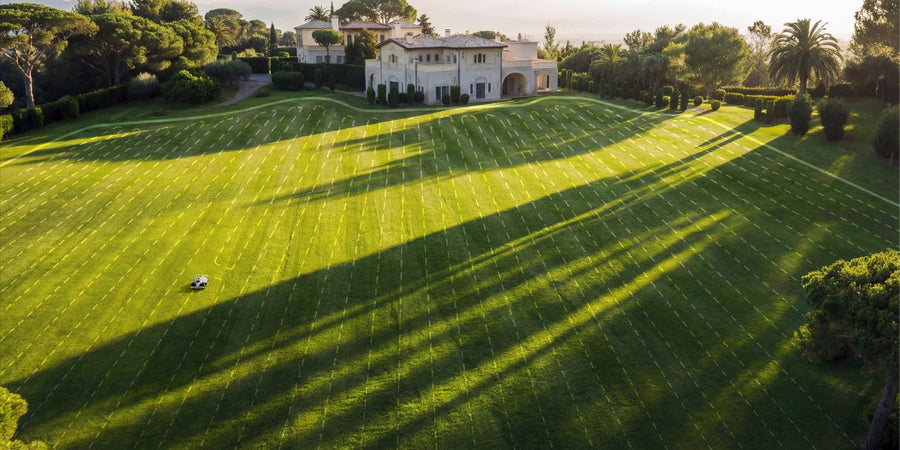
The LUBA 3 AWD introduces the world's leading "3-in-1 Fusion Navigation" technology—a breakthrough combining 360° Radar, NetRTK, and Binocular AI Vision. This wire-free solution completely eliminates the need for boundary wires, a massive advantage for large or complex gardens.
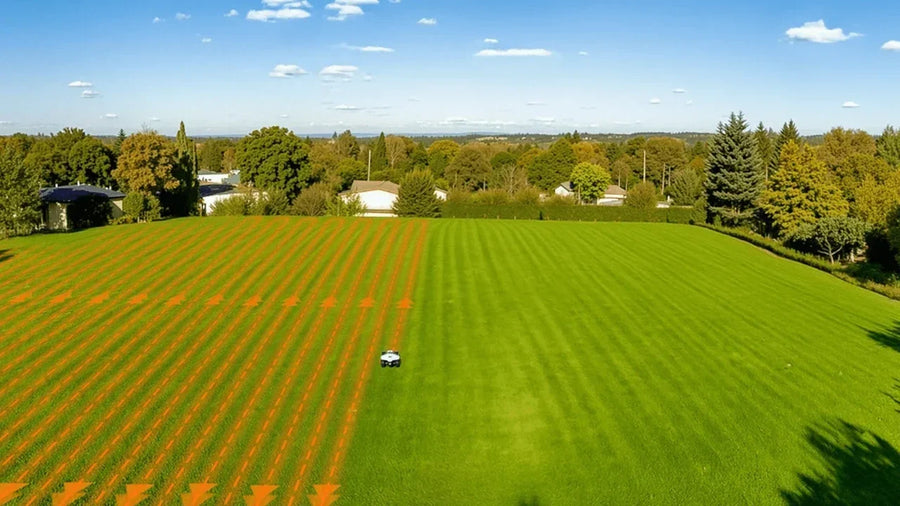
What makes this system a game-changer for remote lawn mowers for hills is its reliability. In gardens with dense tree canopies or near tall buildings where GPS signals often fail, the LUBA 3 AWD seamlessly switches between sensors. By combining vision and radar, the machine can "see" and navigate safely even when RTK signals are limited. Its intelligent path planning analyzes your garden's layout in real-time, ensuring total coverage and uninterrupted operation.

Brainpower: Upgraded AI Chip
The upgraded AI chip in the LUBA 3 AWD performs a staggering 10 trillion operations per second (10 TOPS). This massive computing power doubles the machine’s ability to perceive and decide in real-time. It can rapidly detect objects, analyze surroundings, and avoid over 300 types of obstacles. The LUBA 3 doesn't just mow; it reacts intelligently to the dynamic environment of a real home garden.

Do You Know the Incline of Your Lawn? Here’s How to Measure It
Before investing in a robotic lawn mower for hills, it is essential to know exactly what you are up against. Many homeowners misjudge the steepness of their slopes, but you don't need to be an engineer to get an accurate reading. Here is the easiest DIY method:
The Smartphone & Plank Method:
- Download a spirit level app on your phone or use the built-in measurement feature (such as the "Measure" app on iPhone).
- Find a straight wooden plank, approximately 1–2 metres in length.
- Place the plank on the steepest part of your slope.
- Set your phone on top of the plank and read the value in either degrees or percentage.
If the lawn slope is close to 45% (about 24°), most standard lawnmowers will struggle to handle it. A professional lawnmower like the LUBA 3 AWD (capable of handling 80% slopes) is the effective way to ensure reliable cutting.
Continue to learn how to mow steep slopes.
Summary
Caring for a garden with challenging terrain shouldn't be a source of stress or back-breaking physical labour. Your garden is meant to be a sanctuary—a place for relaxation—and even the most steep slopes deserve to be perfectly manicured without demanding your constant effort.
We hope this guide has given you the confidence to find the right technology for your landscape. By choosing a mower designed for the task, you can finally sit back and enjoy your green oasis, knowing that your lawn is in safe, capable hands.
FAQ
1. How to mow a 20-degree slope?
Mowing a 20-degree slope (which is approximately a 36% incline) requires a mower with specialized traction. For smaller gardens (under 1000㎡ /0.25acres ) with 20-degree slope, we recommend the YUKA mini 2 series. For mid-large gardens (1500㎡-5000㎡), try LUBA mini 2 AWD or LUBA 3 AWD.
2. Are robot mowers good for hills?
Yes, but it depends entirely on the drive system. Standard 2WD models are often not suitable for significant inclines as they tend to slip or lose course. However, AWD (All-Wheel Drive) robotic mowers are exceptionally good for hills. They provide the necessary grip and torque to maintain a straight line and consistent cutting height even on rugged, undulating landscapes.
3. Do robot lawn mowers work on slopes?
Most modern robot mowers can handle basic slopes of around 15% to 25%. However, if you are looking for the best robot lawn mower for slopes that are steeper, you must look for models specifically rated for high-incline performance. These machines use advanced sensors and weight distribution to "hug" the ground, ensuring they work effectively on slopes where traditional push mowers might be dangerous to operate. You can check out the solutions offered by Mammotion.
4. What is the maximum slope for a robot lawn mower?
The maximum slope varies by model. While entry-level robots typically cap out at 25–35%, the best robot mowers for steep slopes—like the Mammotion LUBA 3 AWD series—can tackle inclines of up to 80% (38.6°). This makes them the most powerful consumer-grade solution for extremely steep or mountainous garden environments.
Did you like this article? Add us as a preferred source to find us more easily on Google.



Leave a comment
This site is protected by hCaptcha and the hCaptcha Privacy Policy and Terms of Service apply.