







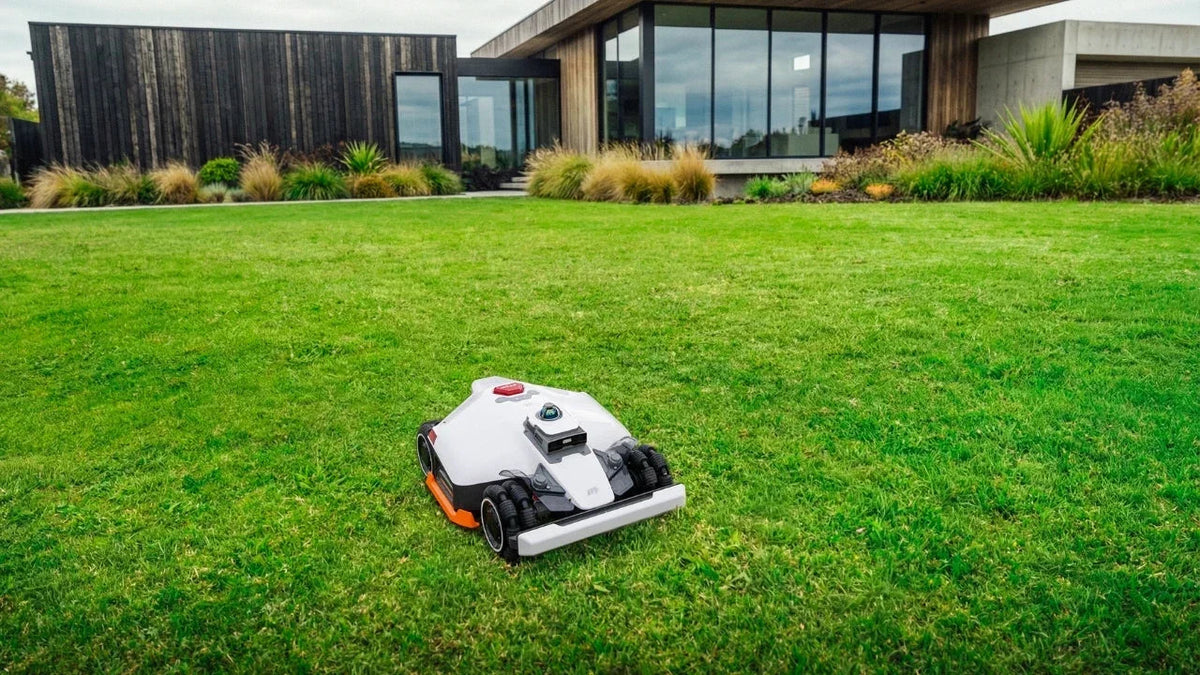
Many people are unsure what size robot lawn mower will suit their garden before making a purchase. The ideal machine minimises lawn maintenance while delivering fast, attractive mowing results. This guide explains how to choose a robot lawn mower that is the right size for your lawn.
Why is robot lawn mower coverage so important?
Before buying a robot lawn mower, the mowing area should be the first specification you consider. After all, the mower can only finish mowing your entire property if it has sufficient capacity. Here are the main reasons why robot lawn mower capacity matters:
- Avoid unnecessary wear: If the machine's capacity does not match the size of your lawn, it will be forced to operate around the clock at maximum output. This accelerates hardware wear and significantly shortens battery life.
- Give the lawn time to recover: If a robot lawn mower travels over the same area continuously, the blades of grass never have the opportunity to stand upright properly, which affects the quality of the lawn.
- Maintain efficiency during peak growing season: Greater mowing capacity generally means higher efficiency. During the European growing season, when grass grows fastest, the robot needs enough power and capacity to maintain an even, well-kept finish.
- Account for external factors: In practice, lawns are rarely perfectly flat. Slopes, steep inclines, slippery ground and obstacles such as flower beds, branches or toys all affect the robot's actual range and maximum mowing area.
This is why it is so important to assess your lawn carefully before buying—it lays the foundation for a trouble-free summer.
How big a lawn can a robot mower cut?
Most manufacturers specify how much lawn the mower can cover per hour, the time required to charge from 0% to 100% and the operating time available after each charge. For example, if a mower covers 500 square metres per hour, takes 200 minutes to charge and can operate for 240 minutes on one charge, it can mow 2,000 square metres per charge. (This is the ideal situation. Actual time may vary due to obstacles and complex terrain.)
What size robot lawn mower do I need?
When buying a robotic lawnmower, it is generally recommended to choose a model with a rated working area 20% to 30% larger than your actual lawn area. For example, if your garden measures 500 m², select a model rated for between 600 m² and 650 m². This prevents the machine from being overworked and extends the life of its battery and motor.
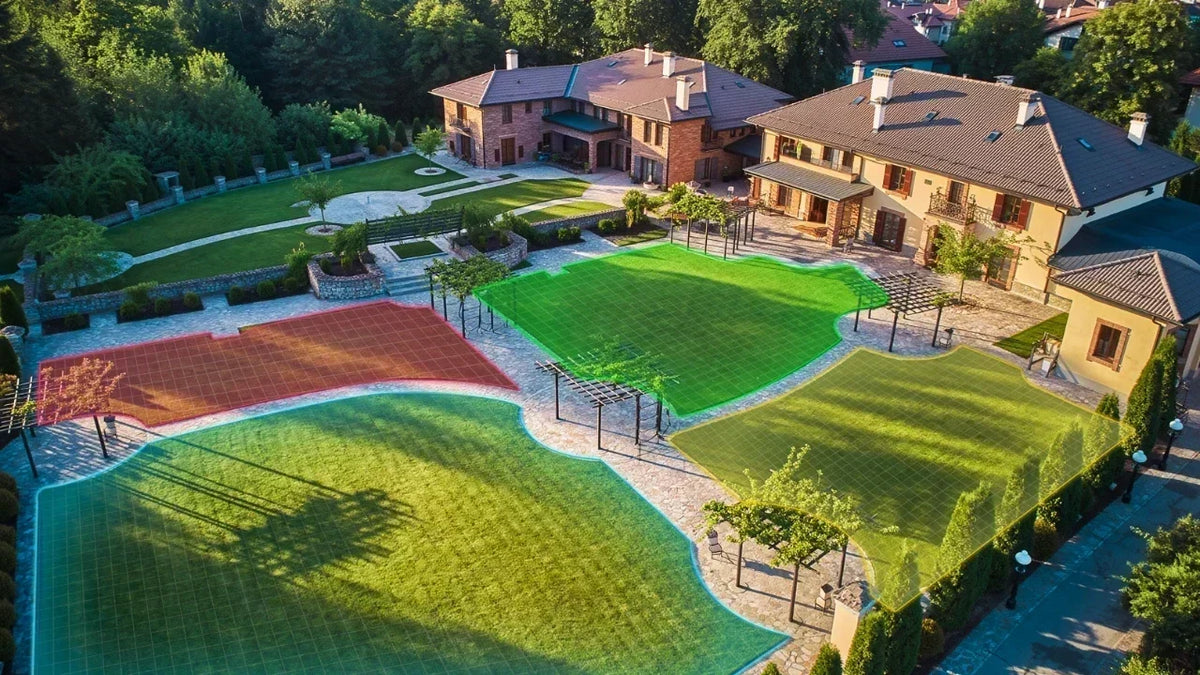
We divide lawns into several common sizes—small lawn (under 1000㎡), medium lawn (1000㎡ to 1500㎡), and large lawn (3000㎡ to 5000㎡)—and explain how to choose a robot lawn mower for each area based on the most important requirements at that scale.
Practical guide
| Lawn Size | Typical Area | Common Lawn Types | What to Consider |
|---|---|---|---|
| Small | Up to 1,000 m² | Urban gardens, small front or back gardens, detached-house gardens and regularly shaped lawns | Focus on recommended lawn area, mower size, navigation system and edge-cutting performance. For smaller lawns, there is usually no need to choose a high-capacity model simply for its larger coverage. If the garden has flower beds, trees or narrow passages, also consider obstacle detection and zone management. |
| Medium to Large | Up to 1,500 m² | Medium-sized residential lawns, larger detached-house gardens and lawns with several planting areas | In addition to lawn coverage, consider positioning and navigation, battery life, charging efficiency and multi-zone management. If the lawn consists of several separate areas or has more complex boundaries, wire-free navigation and flexible zone settings can be particularly useful. |
| Large | Up to 5,000 m² | Large residential lawns, country-house gardens, large private estates, and small commercial or public green spaces | Pay particular attention to mowing efficiency, battery capacity, maximum working area, terrain handling and navigation reliability. On larger lawns, the mower needs to cover a greater area efficiently, making mowing performance and an effective charging strategy increasingly important. |
| Extra Large | Over 5,000 m² | Large estates, farm properties, hotel and resort grounds, and commercial or public lawns | Focus on large-area mowing capability, multi-zone management, positioning accuracy, terrain handling, battery and charging efficiency, and remote management features. If the lawn includes extensive slopes, complex boundaries, dense tree coverage or several separate areas, consider a model designed for large and more demanding environments. |
1. Small gardens
Maximum area: approximately 800–1000 ㎡
For smaller areas, precision is key. These gardens are often more compact and contain more fixed obstacles, so they require an agile machine.
Key priorities: Manoeuvrability, quiet operation and intelligent obstacle detection (AI Vision).
Buying advice: Choose a compact model that can easily pass through narrow spaces and navigate around flower beds without damaging the edges. Ease of use and app control are more important here than sheer cutting width.
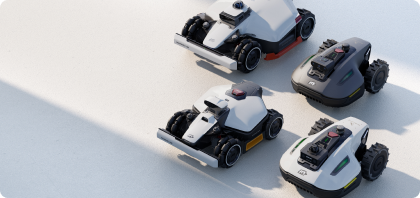
Product Recommendations: YUKA mini 2
Read the buying guides: Robot lawn mower advice for small gardens and the buying guide for 1000 ㎡.
2. Medium-sized gardens
Maximum area: approximately 1500 ㎡
Lawns of this size are common across Europe. A good balance between mowing time and charging time is essential to give the lawn sufficient time to recover.
Key priorities: Reliability and efficiency.
Buying advice: For an area of 1500 ㎡, we strongly recommend a boundary-wire-free model to avoid future cable breaks across a relatively large lawn. Look for a machine with enough battery capacity to mow substantial sections of the property on a single charge.
Product Recommendations: LUBA mini 2 AWD
Read the buying guide: robot lawn mower for 1500 m².
3. Large lawns and landscapes
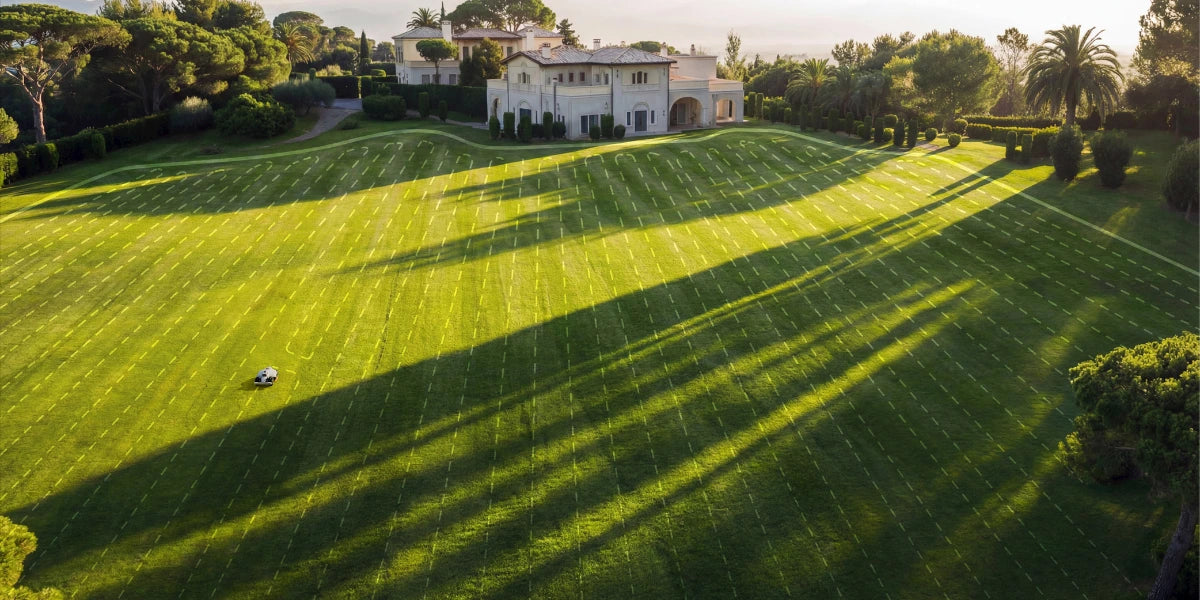
Maximum area: approximately 3000–5000 ㎡
Large lawns require an entirely different class of mower. The challenge is to cover a vast area efficiently before the grass at the other end of the property has time to grow too long.
Key priorities: Cutting width, terrain capability (AWD) and reliable navigation.
Buying advice: Choose a machine with dual cutting discs to maximise efficiency. If your property is hilly, all-wheel drive is essential. For areas of up to 5000 ㎡, make sure the machine supports RTK technology to maintain a reliable signal throughout the property.
Product Recommendations: LUBA 3 AWD
Read the buying guides: Robot lawn mower buying guide for 3000 m² and larger lawns.
Key factors affecting the robot lawn mower size and model
These are the main factors that can affect the size of robot lawn mower you actually need:
1. Terrain and slope
If your garden has steep slopes, such as areas above 30°, or uneven and challenging terrain, maintaining traction can become more difficult for conventional two-wheel-drive models. For demanding terrain, consider a model with strong traction, larger wheels, a stable centre of gravity and all-wheel drive (AWD). These features can help the mower maintain stability and traction on slopes and uneven ground. Models such as the LUBA series are designed for challenging terrain.
Learn more: The best robot lawn mower for slopes
2. Passage width
Measure the narrowest passage that the mower needs to travel through. The mower's overall width should be smaller than the available passage width, with sufficient clearance to allow it to pass through reliably without becoming stuck. This is particularly important in gardens with narrow paths between lawns, buildings, flower beds or other fixed features.
3. Obstacles and lawn edges
Gardens with many trees, flower beds and other obstacles generally benefit from a more compact and manoeuvrable mower, as it needs to navigate around more objects and through tighter spaces. By contrast, an open and relatively flat lawn can benefit from a model with a wider cutting deck, which can cover more ground during each mowing cycle and potentially reduce overall mowing time.
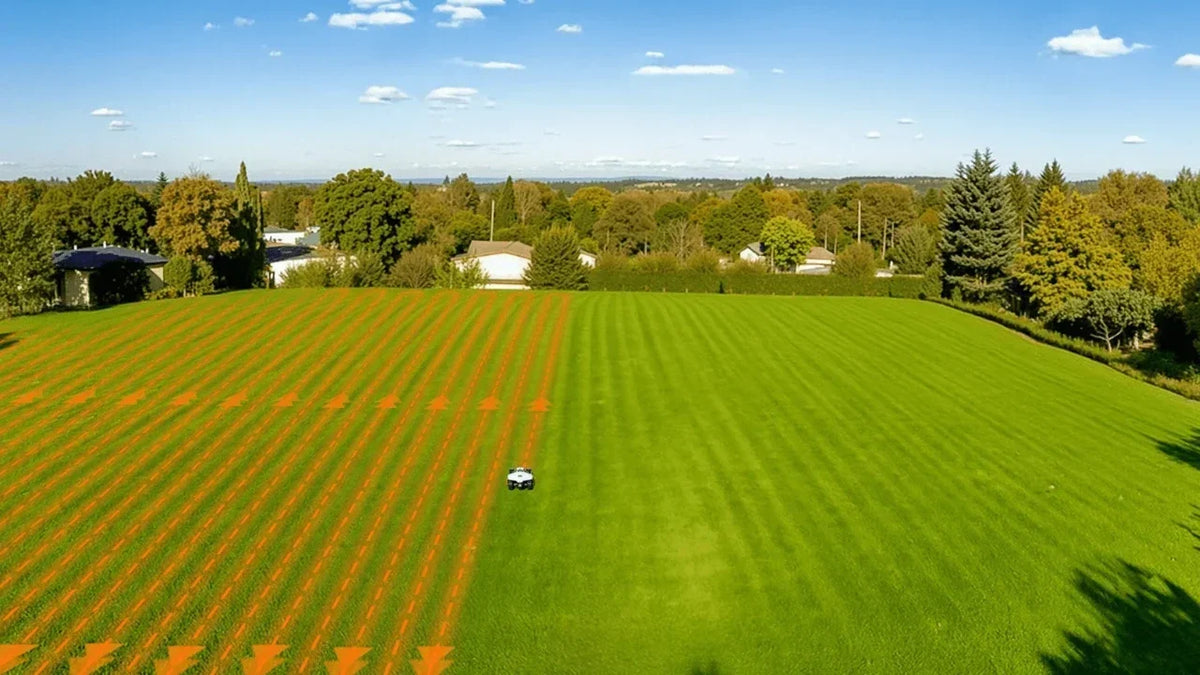
4. Path planning and navigation efficiency
Traditional robot lawn mowers commonly use physical boundary wires to define the mowing area. Installing and maintaining these wires can make changes to the lawn layout less convenient. Modern wire-free models can use technologies such as GNSS/RTK positioning, cameras, LiDAR and software-based path planning to determine their position and plan mowing routes without a physical boundary wire. However, navigation performance depends on the technology used and the conditions of the garden, including obstacles, vegetation and signal availability.
5. Battery runtime and mowing speed
Battery capacity, runtime and mowing speed become increasingly important as lawn size increases. Robot mower specifications vary significantly: some models offer around 1–2 hours of operation and mowing capacities of roughly 100–400 m² per hour, while larger, higher-capacity models can provide longer operating periods and mowing rates of around 500 m² per hour or more. For a larger lawn, look beyond battery runtime alone and consider the mower's rated working area, mowing efficiency, charging time and ability to resume mowing automatically. These factors determine how effectively the mower can maintain the entire lawn over the course of a day.
Conclusion
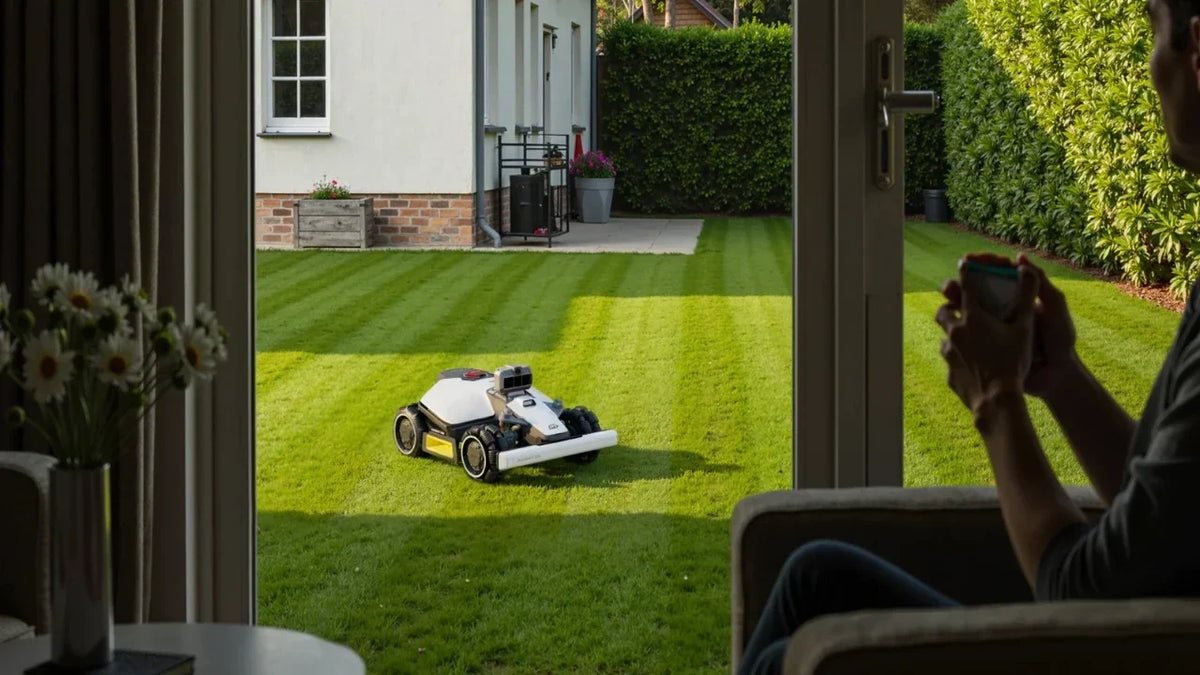
The size of your lawn will certainly influence your choice, as no single robot lawn mower is perfectly suited to every type of garden. To find the right model, it is best to understand the specific conditions of your garden before making a purchase.
Did you like this article? Add us as a preferred source to find us more easily on Google.


Leave a comment
This site is protected by hCaptcha and the hCaptcha Privacy Policy and Terms of Service apply.