



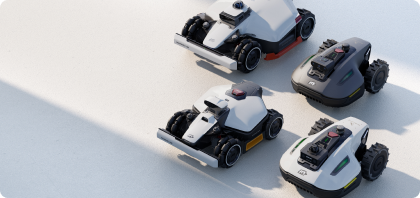




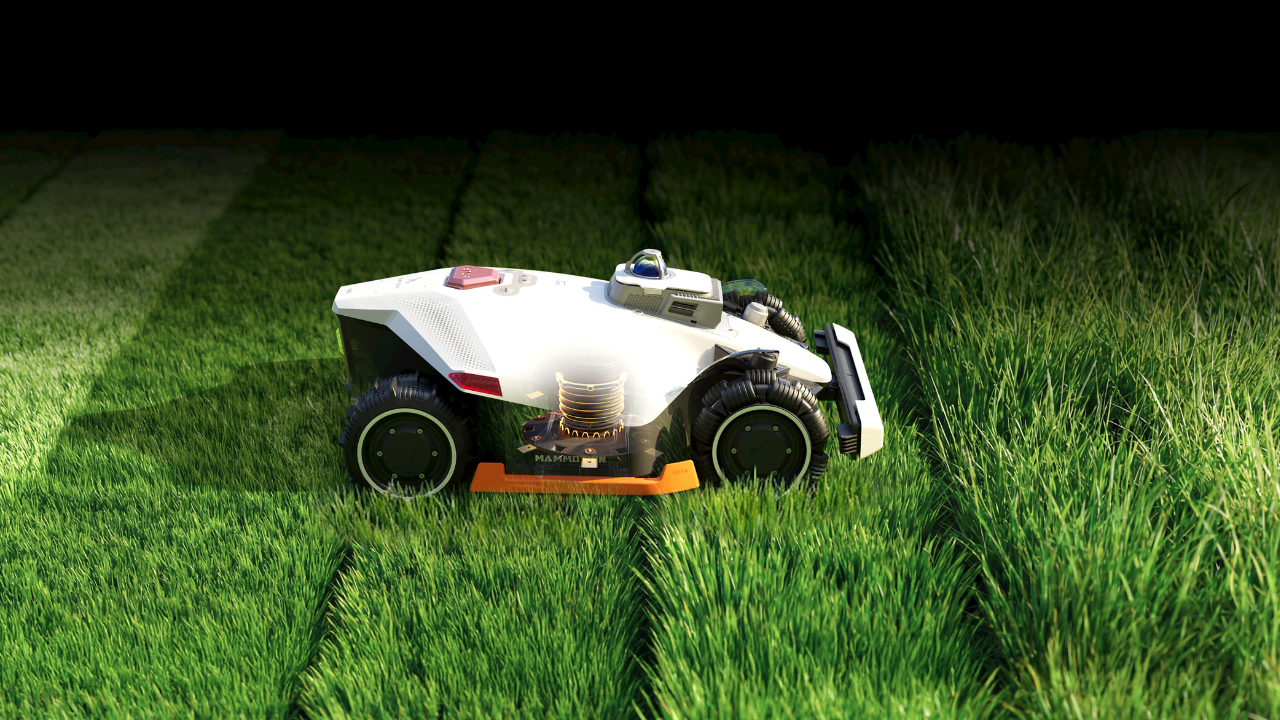
Grass mowing height has a direct impact on the health, density and appearance of your lawn. A suitable lawn cutting height allows the grass to photosynthesise efficiently, develop a deeper root system and reduce the risk of weeds and moss. However, the ideal mowing height is not the same throughout the year – it varies depending on both the season and the grass variety.
In this guide, we explain the best height to mow grass for each season and grass type in Europe.
Best Mowing Height by Grass Type
Different grass species thrive at different mowing heights, so there is no single ideal cutting height for every lawn. Across Europe, cool-season grasses are the most common because they grow well in temperate climates. Warm-season grasses are mainly found in southern European countries, where summers are hotter and drier.
The chart below shows the optimal mowing heights for the most common lawn grasses found across Europe, such as Bermuda grass, St. Augustine grass, Zoysia grass, and tall fescue.
| Grass species | Main growing season | Characteristics | Best mowing height | Why? |
|---|---|---|---|---|
| Perennial Ryegrass (Lolium perenne) | Spring & Autumn | Fast germination, hard-wearing, bright green | 35–50 mm | Maintains a dense lawn while recovering quickly from foot traffic and regular mowing. |
| Red Fescue (Festuca rubra) | Spring & Autumn | Fine-leaved, shade-tolerant, drought-resistant | 30–50 mm | Can be mown slightly shorter while still maintaining a healthy, dense turf. |
| Kentucky Bluegrass (Poa pratensis) | Spring & Autumn | Strong root system, excellent self-repair, winter hardy | 40–60 mm | A slightly higher mowing height encourages deeper roots and improves drought tolerance. |
| Tall Fescue (Festuca arundinacea) | Spring to Autumn | Deep-rooted, highly drought-tolerant, low maintenance | 50–70 mm | Longer blades help retain moisture and support its naturally deep root system. |
| Bermuda Grass (Cynodon dactylon) | Summer | Heat-loving, fast-growing, highly wear-resistant | 20–40 mm | Performs best when kept relatively short, producing a dense, resilient lawn. |
| Zoysia Grass (Zoysia spp.) | Summer | Dense growth, slow-growing, drought-tolerant | 20–40 mm | Lower mowing heights encourage a compact, carpet-like appearance. |
| St. Augustine Grass (Stenotaphrum secundatum) | Summer | Broad leaves, salt-tolerant, suitable for coastal areas | 50–75 mm | Taller mowing helps protect the wider leaf blades and reduces heat stress during hot weather. |
Cool-season grasses – the most common choice across Europe
Most lawns in northern and central Europe are made up of a mixture of Perennial Ryegrass, Red Fescue, Kentucky Bluegrass and Tall Fescue. These grasses grow most actively when temperatures are between 10°C and 25°C, making spring and autumn their peak growing seasons.
For these lawns, a mowing height of 40–50 mm is suitable for most of the growing season. During hot, dry weather, increasing the cutting height to 60 mm or above helps shade the soil, reduce moisture loss and encourage deeper root growth.
Warm-season grasses – mainly found in southern Europe
Warm-season grasses are less common across Europe but are increasingly used in Mediterranean regions such as Spain, Portugal, southern Italy and Greece, where they tolerate prolonged heat and drought better than cool-season species.
Bermuda Grass, Zoysia Grass and St. Augustine Grass grow most vigorously when temperatures exceed 20°C. They generally perform best at lower mowing heights than cool-season grasses, although St. Augustine Grass benefits from being kept slightly taller because of its broader leaf blades.
Best Mowing Height by Season
The optimal mowing height changes throughout the year as grass growth responds to temperature, rainfall and daylight.
Summary Chart
| Season | Recommended mowing height |
|---|---|
| Spring | 60 mm → 40–50 mm |
| Summer | 60–80 mm (up to 80 mm during heatwaves) |
| Autumn | 40–50 mm |
| Winter | Stop mowing |
Spring: Encourage Healthy New Growth
Recommended mowing height: 60 mm → 40–50 mm
After winter, the lawn needs time to recover. Begin the season with a relatively high cutting height of around 60 mm. Once the grass starts growing actively, you can gradually lower the height to 40–50 mm.
The higher cutting height protects the new shoots and allows the grass to build up its energy reserves through photosynthesis. Lowering the height gradually stimulates new growth without subjecting the lawn to unnecessary stress.
Summer: Raise the cutting height during dry periods
Recommended mowing height: 60–80 mm (up to 80 mm during heatwaves)
During summer, lawns are often exposed to heat and drought. In these periods, it is best to raise the cutting height to 60–80 mm. If a heatwave occurs, you can increase it further to around 80 mm.
Longer grass acts as natural protection for the soil. It shades the surface, reduces evaporation and keeps the roots cooler. It also reduces the risk of the lawn turning brown or becoming scorched by strong sunlight.
Autumn: Prepare the lawn for winter
Recommended mowing height: 40–50 mm
As temperatures fall and growth slows, the lawn should gradually return to a normal cutting height of 40–50 mm.
Avoid cutting the grass too short before the first frost. Slightly longer grass protects the growing points and helps the lawn survive winter more successfully, while reducing the risk of frost damage.
Winter: Stop mowing when the grass stops growing
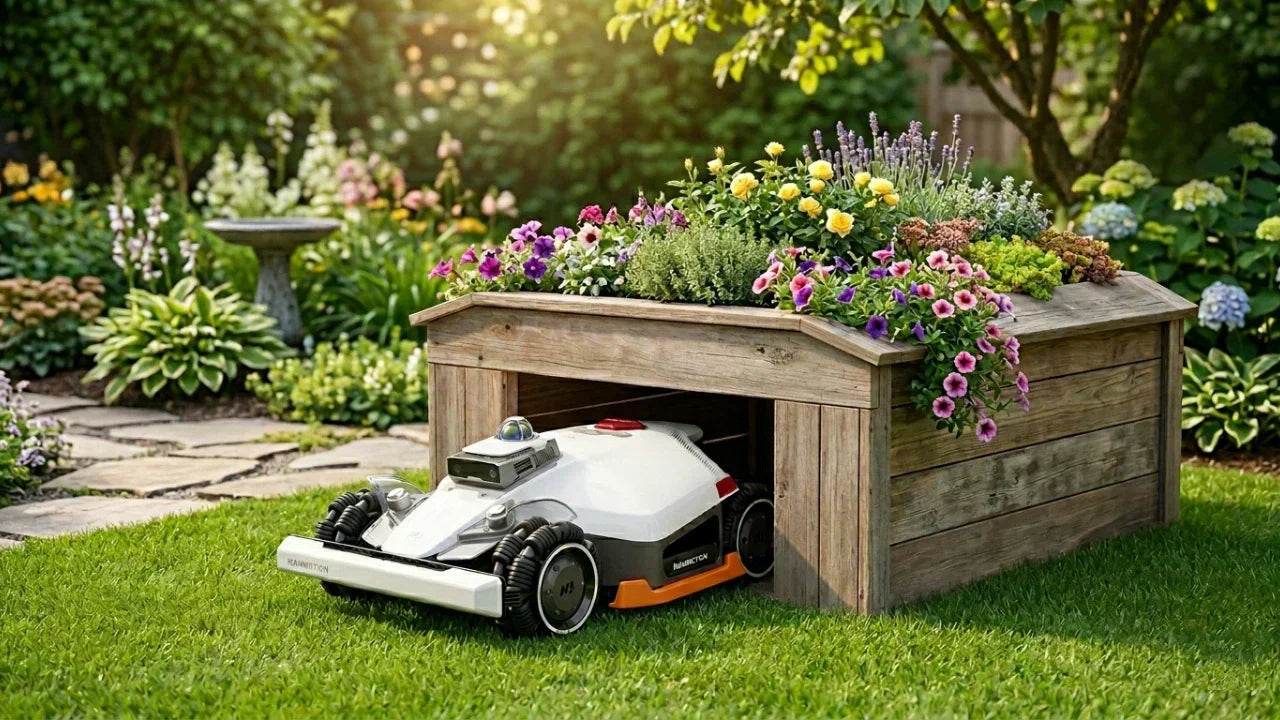
Recommendation: Do not mow the lawn once growth has stopped. Store the robotic lawn mower in a dry, frost-free location during winter.
When temperatures fall below approximately 5–10 °C, the grass becomes dormant and stops growing. You should then switch off the robotic lawn mower and wait until spring.
Continuing to mow during winter provides no benefits. On the contrary, short grass may be more vulnerable to frost, fungal diseases and other winter damage. This is also a good time to clean the robotic lawn mower, inspect the blades and store it somewhere dry and frost-free until the next season.
How to adjust the mowing height on a robotic lawn mower
Most traditional lawn mowers require the cutting height to be adjusted using a manual control directly on the machine. If you want to change the cutting height while mowing, you have to go out to the lawn, and some models also require tools. Because this is inconvenient, many users choose a fixed cutting height at the start of the season and then leave it unchanged. However, using the same cutting height throughout the year is rarely best for lawn health.
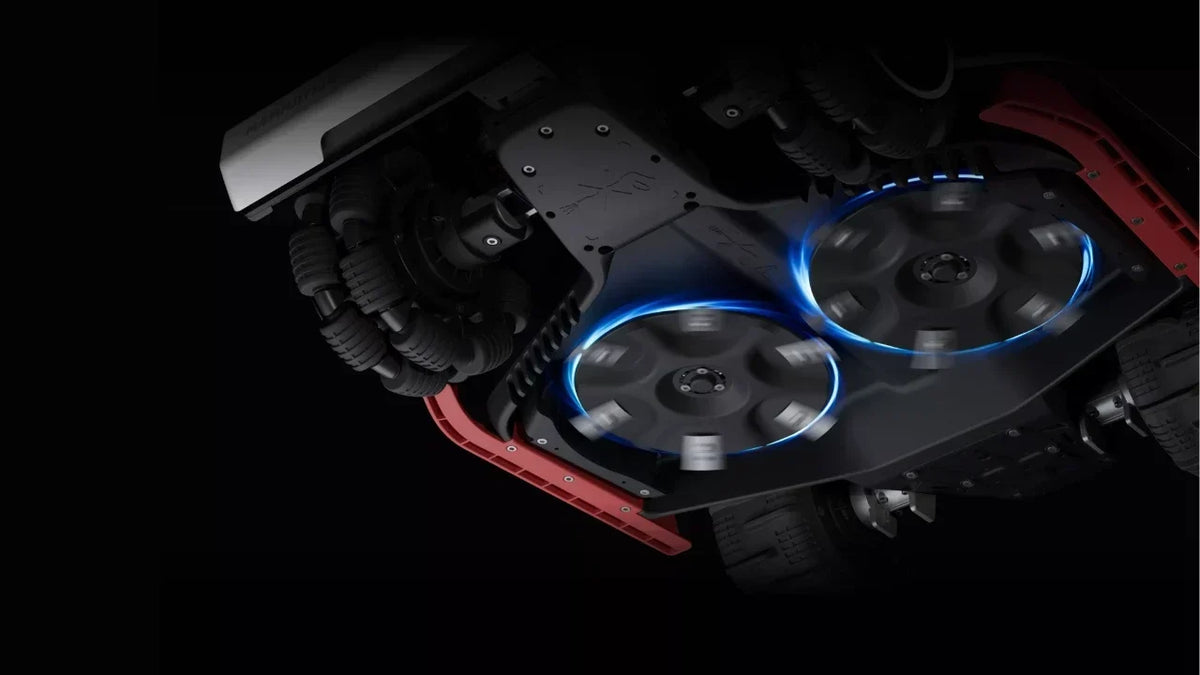
Wire-free robotic lawn mowers offer a smarter solution. Several models are already available, including models from the leading brand Mammotion. Its wire-free robotic lawn mowers in the LUBA and YUKA series feature adaptive height adjustment that can be controlled directly through the app. You can easily adjust the cutting height with great precision without leaving your sun lounger or using any tools.

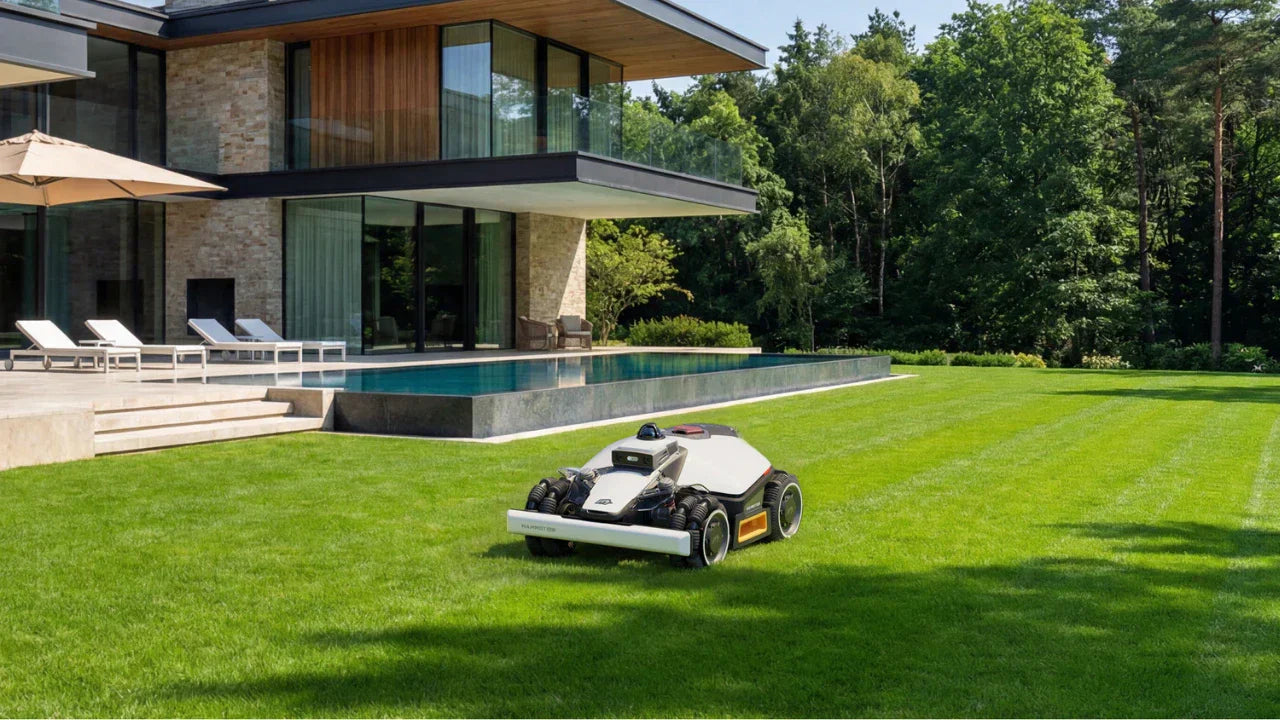
In addition, Mammotion's wire-free robotic lawn mowers in the LUBA and YUKA series can automatically adapt the cutting height to grass growth and uneven areas of the lawn. Maintaining a consistent cutting height across the entire lawn produces a more uniform finish, making the lawn look denser, tidier and professionally maintained.
| Traditional robotic lawn mower | Mammotion wire-free robotic lawn mower |
|---|---|
| Manual dial | Adjustment via the app |
| Fixed cutting height | Automatic and flexible height adjustment |
| May require tools | No tools required |
| Requires you to go out to the machine | Adjusted remotely through the app |
| Difficult to adapt to the season | Easy to change according to the season and weather |
The one-third rule – the golden rule for the best mowing height
Regardless of which type of lawn mower you use, the one-third rule always applies: never remove more than one-third of the grass blade's length in a single mowing session.
Why should you avoid cutting the grass too short?
Grass blades act as the lawn's "solar panels", producing energy through photosynthesis. If a large proportion of the blades is removed at once, energy production falls sharply. This results in a weaker root system, yellowing grass and an increased risk of diseases, pests, weeds and moss.
How to apply the one-third rule
Suppose you have not mown the lawn for a few days and the grass has grown to 9 cm. You should not remove more than 3 cm in a single mowing session.
It is best to mow the grass in several stages and lower the cutting height gradually. During the first cut, remove 2–3 cm, followed by a further 1–2 cm during the second cut. This allows the grass to reach a healthy height gradually without being subjected to unnecessary stress.
| Mowing session | Cutting height |
|---|---|
| First cut | 9 cm → 6 cm |
| Second cut | 6 cm → 4.5–5 cm |
| Afterwards | Maintain the desired cutting height |
Common mistakes when setting a lawn mower's cutting height
Here are some common lawn-mowing mistakes that you should avoid.
- Cutting the grass too short ("scalping" the lawn). If the grass is cut so short that the soil becomes visible, the lawn dries out more quickly and becomes more vulnerable to heat. At the same time, weeds such as clover, as well as moss, have a better chance to become established.
- Failing to replace blunt blades. Blunt blades tear the grass rather than making a clean cut. This causes the tips to turn yellow, heal more slowly and become more susceptible to fungal diseases.
- Using the same cutting height throughout the year and failing to follow the one-third rule. The needs of the grass change with the seasons. If you always use the same cutting height or remove more than one-third of the grass blade's length, you risk stressing the lawn and weakening its root system.
- Cutting too low on uneven ground. If the lawn has hollows, roots or other irregularities, an excessively low cutting height may cause the blades to strike the ground. This results in faster blade wear, a poorer finish and may even pull the grass up by its roots.
- Mowing wet grass. Wet grass is easily flattened and therefore cut unevenly. Clippings are also more likely to stick beneath the mowing deck and to the blades. Ideally, wait until the grass has dried before allowing the robotic lawn mower to operate.
- Leaving weeds and diseased grass clippings on the lawn. There are both lawn mowers with and without grass collectors. Healthy grass clippings can normally be left as mulch because they return nutrients to the lawn. Weeds and clippings affected by disease, however, should be collected and removed to reduce the risk of spreading.
- Mowing the lawn at night. Night-time is when many animals, particularly hedgehogs, are most active. Operating the mower at this time increases the risk of harming them. You should therefore mow the lawn during daylight hours whenever possible. If night-time mowing cannot be avoided, a robotic lawn mower with advanced obstacle detection, such as LiDAR and cameras, including the Mammotion LUBA 3 AWD or LUBA mini 2 AWD, is a safer option. These models can detect obstacles at distances of up to 70 metres and help avoid collisions with animals and other objects.

Mowing tips for a more beautiful lawn
Here are a few simple tips that can make a big difference to the appearance of your lawn.
1. Use a wire-free robotic lawn mower
Traditional robotic lawn mowers with boundary wires often follow simpler mowing patterns and require time-consuming installation. Modern wire-free robotic lawn mowers from Mammation with AI vision, LiDAR or GPS-RTK positioning can instead plan systematic mowing routes and deliver a much more even finish. These models can also create straight mowing lines or decorative lawn patterns, giving the lawn a professional appearance.
2. Make sure the blades are always sharp
Even the best cutting height will produce inferior results if the blades are worn. Sharp blades cut the grass cleanly, helping it heal more quickly and retain its healthy green colour. Inspect the blades regularly and replace them once they become blunt to ensure an even, tidy finish.
3. Mow the entire lawn regularly
A robotic lawn mower works best when it covers the entire lawn frequently rather than cutting large amounts of grass on occasional mowing sessions. Regular mowing keeps the grass height even, follows the one-third rule and produces denser grass with fewer weeds and less moss. The fine clippings are also distributed evenly across the lawn, where they act as a natural source of nutrients.
4. Neaten edges and hard-to-reach areas
For a truly well-maintained finish, it is a good idea to use a grass trimmer or lawn edger to tidy the lawn edges and other hard-to-reach areas. Neatly cut edges often make the greatest visual difference and make the entire garden look better maintained.
Summary
Take a few minutes today to check the current cutting height of your robotic lawn mower. A small height adjustment, combined with a couple of sharp blades and regular maintenance, can make a greater difference than you might expect.
Did you like this article? Add us as a preferred source to find us more easily on Google.


Leave a comment
This site is protected by hCaptcha and the hCaptcha Privacy Policy and Terms of Service apply.