








As temperatures rise and the classic Irish rain meets the early spring sunshine, lawns across the country begin to surge back to life in late March. This marks the time to take the mower out of the shed. But with our unique climate, do you know exactly how often to mow the lawn to keep it healthy?
In this guide, we highlight the essential mowing schedules for the Irish spring, summer, and fall, teaching you the correct techniques to ensure your garden stays vibrant and beautiful throughout 2026.
How often should you mow the lawn?
In the temperate and often damp Irish climate, there is no single "magic number" for how often you should mow. Instead, the frequency should be dictated by the grass's growth rate, which fluctuates significantly with the changing weather. The goal is to maintain a consistent height to encourage deep roots and a thick carpet that can naturally crowd out the common Irish garden foe: moss.
To achieve this balance, you should follow two primary principles: the golden biological rule and the seasonal calendar.
1. The one-third rule
The most important rule for any Irish gardener is the one-third rule. You should never remove more than one-third of the grass blade's total height in a single mowing session.
If you let the grass grow too long and then cut it back aggressively, you shock the plant, causing it to divert energy away from the roots to repair the blades. This weakens the lawn and leaves it vulnerable to weeds and patchy growth. If your lawn has gotten out of control, it is better to mow it twice in one week, gradually lowering the height, rather than cutting it all at once.
2. Seasonal guide
The Irish growing season is longer than in many other European countries, often requiring a strategy that covers all four seasons:
Spring (March – May): As the soil warms up to around 7-8°C, grass begins its first growth spurt. Initially, you may only need to mow once every two weeks. However, by late April, you should increase this to once a week. This is also the prime time for a verticut lawn treatment to remove winter thatch and moss.
Summer (June – August): During the peak of summer, growth is at its fastest. To keep a manicured look, you should aim for once or twice a week. If Ireland experiences a rare dry spell or heatwave, stop mowing or raise the blades significantly to protect the soil from drying out.
Fall (September – November): Growth begins to slow as daylight hours decrease. You can usually return to mowing once every 10–14 days.
Winter (December – February): Typically, growth stops, and the lawn goes dormant. You should generally avoid mowing in winter to prevent compacting the wet Irish soil. However, in exceptionally mild winters, you might perform a "top-cut" on a high setting once a month—but only if the ground is firm and frost-free.
How to Achieve a Perfect Irish Lawn with a Robotic Mower
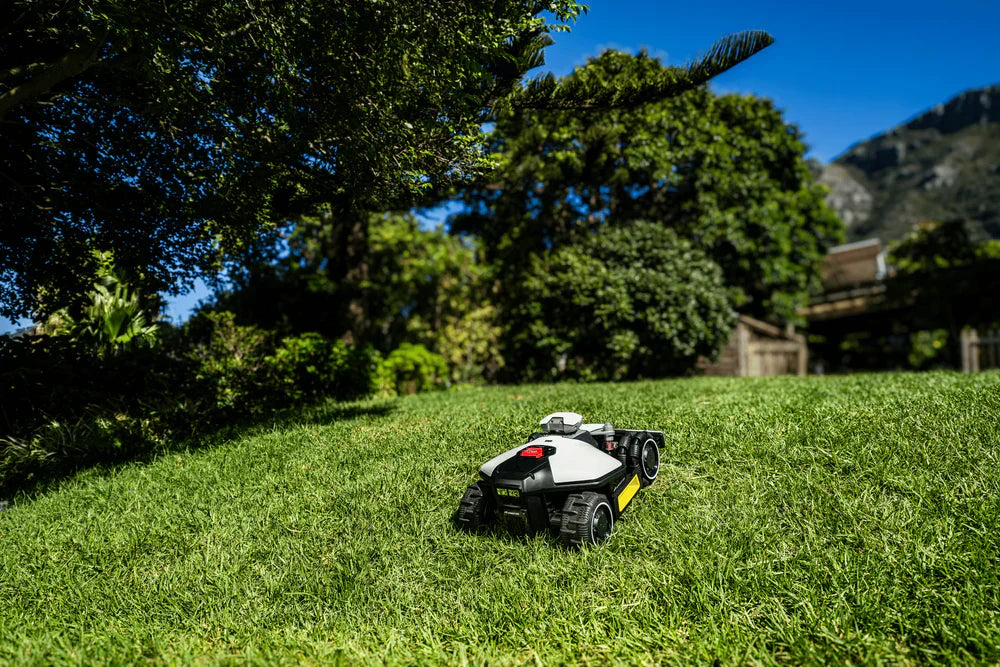
In a climate where "four seasons in one day" is common, finding a dry window to mow manually can be a challenge. A robotic mower solves this by cutting frequently and automatically, ensuring your lawn stays perfectly manicured without you having to check the rain forecast every hour.
With Mammation's world-leading technology, it's easier than ever to achieve professional lawn mowing without the hassle of perimeter wires!
1. Choose the right robotic lawn mower for your lawn size
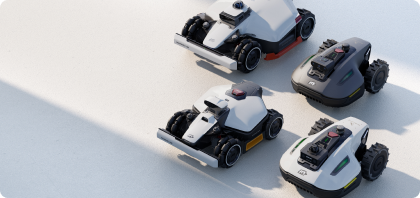
Whether your garden is under 500 square meters or over 3000 square meters, you will always find the best solution at Mammation:
Small lawns (up to 1000 m²):
- YUKA mini 2: AWD all-wheel drive + RTK satellite positioning. Ideal for compact, complex gardens with narrow passages and multiple zones.
- LUBA mini 2 AWD: AWD all-wheel drive + RTK + AI Vision. Suitable for small gardens with slopes and uneven terrain.
Medium-sized lawns (up to 3000 m²):
- LUBA mini AWD LiDAR: Maximum mowing area 1500 m², AWD all-wheel drive + LiDAR + RTK + AI Vision. Suitable for gardens with tree cover or partial signal blocking.
- LUBA 3 AWD (1500 m² / 3000 m² version): AWD all-wheel drive + Tri-Fusion positioning (360° LiDAR + RTK + AI Vision). Suitable for medium-sized gardens with slopes and multiple mowing zones.
- YUKA: Maximum mowing area 3000 m², Rear-wheel drive + RTK satellite positioning. Ideal for open, relatively flat medium-sized gardens.
Large lawns (up to 5000 m²):
- LUBA 3 AWD (5000 m² version): AWD all-wheel drive + Tri-Fusion positioning (360° LiDAR + RTK + AI Vision). Perfect robot lawn mower for large gardens with complex terrain, steep slopes and multiple independent zones.
Choosing a robotic lawn mower model that fits the size of your garden is the first step towards higher cutting efficiency.
2. How to use your Mammotion robotic lawnmower
Setting up and installing the Mammotion robotic lawnmower is very simple and can be quickly completed via the app. Here we take the LUBA 3 AWD as an example and explain how to use the robotic lawnmower to create a beautiful lawn with a pattern.
Detailed installation and setup video for LUBA 3 AWD:
Installation Steps for LUBA 3 AWD robotic lawn mower:
- No need for boundary cables: Thanks to the advanced RTK-GNSS and vision system, you don't have to bury cables in the garden. Simply place the charging station and RTK antenna in a clear view and clear sky.
- App mapping: Using the Mammotion app on your smartphone, move the LUBA 3 AWD around the garden boundaries once to create a virtual map of the garden.
- Set cutting plan: Once the map is created, you can define different zones, adjust the cutting height, and choose cutting patterns (e.g. stripes or checkerboard).
The setup process is very simple, and when you receive the product, a detailed user manual is also included.
3. Maintaining your robotic lawnmower
Although a robotic lawn mower does most of the work itself, regular maintenance is still important to ensure stable operation and a long service life. We recommend that you follow the guidelines below:
- To ensure a clean and precise cutting result, you should regularly check the blades of your robotic lawnmower. They should usually be replaced every 1–2 months, but the actual replacement frequency depends on the actual wear and tear.
- Wait to start your robotic lawnmower until the soil temperature is above 7–8°C. For best results, it is recommended to let the machine work once the morning dew has evaporated.
- Regularly clean the mower housing and underside to prevent grass and roots from becoming entangled and affecting the cutting result.
Proper maintenance of your robotic lawn mower can effectively extend the life of the machine and ensure a more satisfactory cutting result.
Conclusion
In Ireland's climate, maintaining a beautiful lawn can sometimes require a significant amount of effort. Fortunately, the continuous development of robotic lawn mowers has made the job easier. However, you still need to know the right time to mow and respect the natural growth cycle of the grass in order to optimally control your mower and achieve a dense, green lawn.
To summarize the entire text, please keep in mind the following main points:
- Start mowing in the spring when the temperature is around 7–8 °C. In autumn, you should stop mowing when the grass growth clearly slows down and before the first night frost sets in, to avoid frost damage.
- Follow the one-thirds rule. Never mow more than a third of the length of the grass at a time to avoid unnecessary stress on the lawn.
- Take advantage of technology. Robotic lawnmowers like the Mammotion LUBA 3 AWD can perform precise and automatic mowing, giving you more time to enjoy the garden.
- Maintenance is essential: make sure the blades are sharp and adjust the mowing time according to the day's weather conditions and dew.
We hope you create the perfect lawn and enjoy life's little pleasures in the garden.
Frequently Asked Questions
1. Can you mow your lawn too much?
Yes, you can, actually. If you cut the grass too often and especially too short (less than 3 cm in a regular garden), you weaken the root system. A "shaved" lawn has a hard time competing against moss and weeds, which quickly fill in the bare spots. In addition, the grass becomes more vulnerable to drying out, as the soil is directly exposed to the sun's rays.
2. What happens if you don't mow the lawn?
It can cause problems to let it go. If you don't mow the grass, the blades of grass start to become "woody" and coarse at the base to be able to support their own weight. This is called lignification (forewooding).
- Poor drainage: An excessively long and tangled lawn retains moisture at the soil surface, which can lead to fungal diseases and poor air circulation to the roots.
- Difficult to restore: When you finally cut the long grass, the bottom will be yellow and lifeless, and it will take weeks for the lawn to become nice and green again.
3. Is it good to leave the grass lying around?
Yes, in most cases it is a good idea. Leaving grass clippings on the lawn, often called "mulch," is one of the simplest ways to naturally revive your garden.
Here are the key benefits and considerations:
- Natural fertilizers: Grass clippings contain essential nutrients such as nitrogen, phosphorus, and potassium. When left on the lawn, it decomposes quickly and returns these nutrients directly to the soil.
- Prevents drying out of the soil: In the hot summer, a thin layer of grass clippings acts as "sunscreen" for the lawn. It helps the soil retain moisture and reduces water evaporation.
- When the grass grows too long, it can clump together into large, moist pieces of clippings, which can suffocate the grass underneath and promote fungal growth and rot. When this is detected, you should immediately remove the grass clippings to prevent further spread of the disease.
4. What time of day can you mow the lawn?
The best time to mow the lawn is in the late afternoon or early evening (4-6 p.m.), when the dew has evaporated, the sun is no longer strong, and the lawn is not dry. Avoid mowing grass before 10 a.m., as damp grass tends to clump and can damage the lawn. To avoid disturbing your neighbors, it is also best to mow the lawn at the recommended times on weekends.
Did you like this article? Add us as a preferred source to find us more easily on Google.




Leave a comment
This site is protected by hCaptcha and the hCaptcha Privacy Policy and Terms of Service apply.