



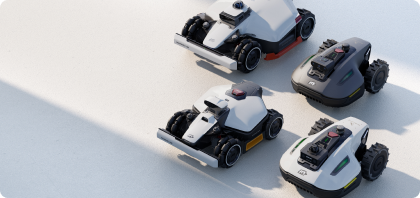




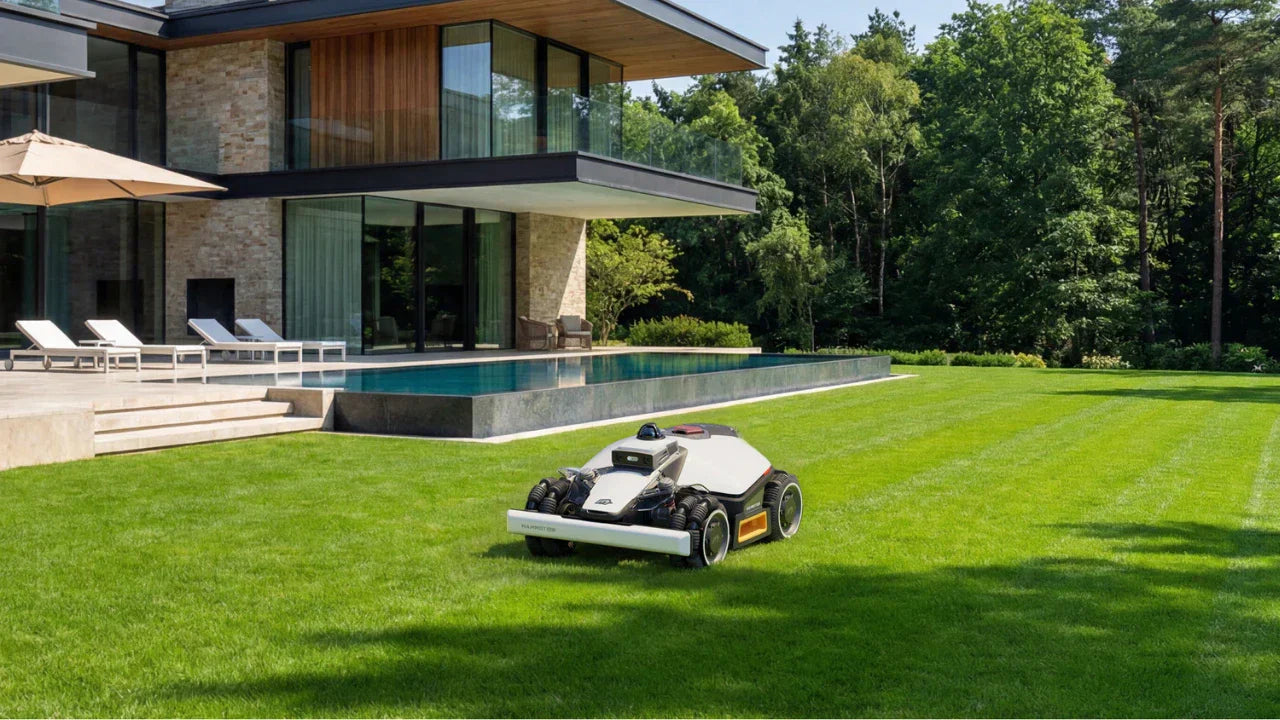
Investing in a cordless, smart garden machine is a great way to save time, but it’s only natural to wonder about the machine’s durability. How long does a robot lawn mower last? Will it withstand harsh weather, complex terrain, and years of daily mowing?
To maximize your investment, you need to keep an eye on key components like the motor and battery. In this article, we present information on the lifespan, maintenance, and tips for extending the lifespan of robotic lawn mowers.
Quick Overview – Everything You Need to Know in 1 Minute
- Average lifespan of a robotic lawn mower: 8 to 10 years (assuming proper maintenance).
- Robot lawn mower battery lifespan: 3 to 5 years (approximately 300–500 charge cycles).
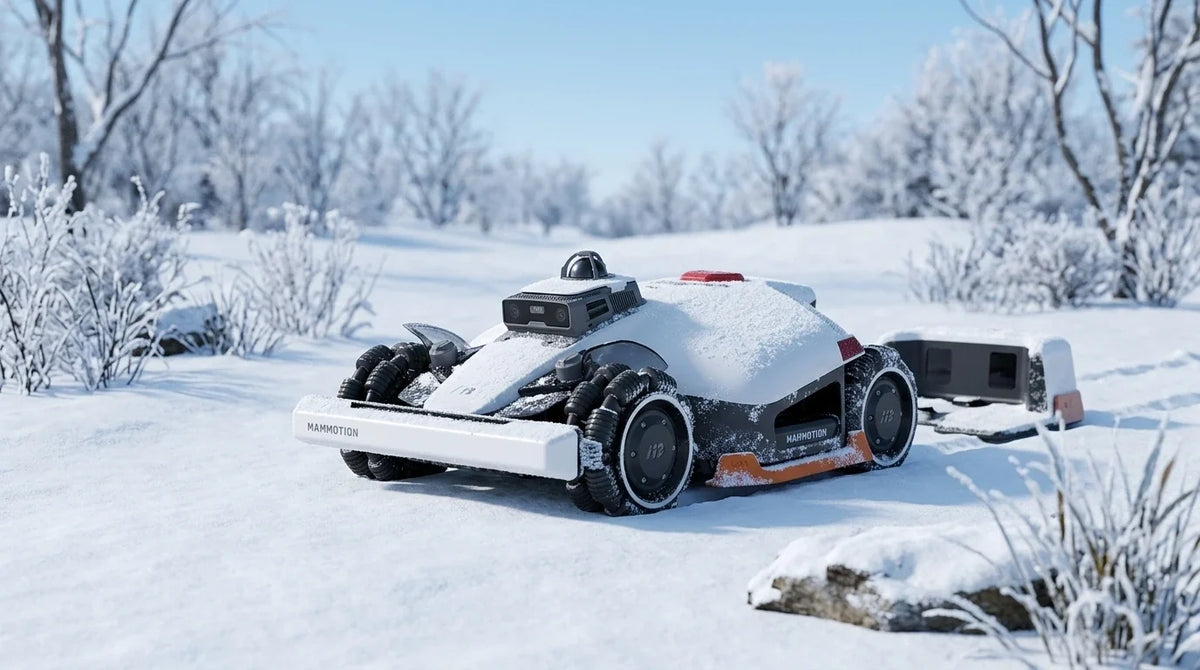
- Biggest threat to lifespan: Leaving the robot outdoors in freezing temperatures or charging it in extreme cold can permanently destroy the battery cells and damage the electronics.
- Most important maintenance tip: Before frost arrives, the robot and charging station must be brought indoors to a dry, frost-free storage room or garage. Charge the battery to approximately 50–80% before storage to avoid deep discharge.
How long does a robotic lawnmower last
Generally speaking, a robotic lawnmower can have a lifespan of up to 10 years. However, a robotic lawnmower is not a homogeneous machine – it is made up of different components whose expected lifespan and wear rate vary considerably.
1. Chassis and housing: 8 to 10 years
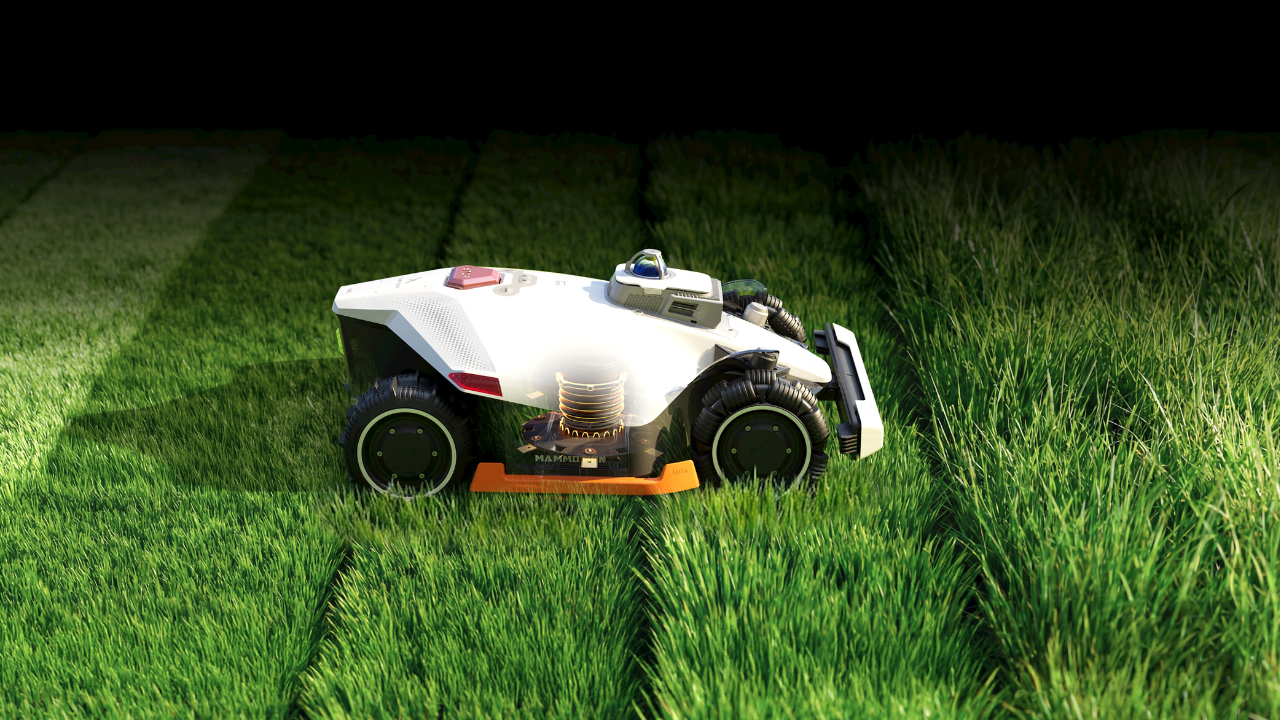
The body of a high-quality robotic lawnmower is designed to be extremely durable and has a typical lifespan of up to a decade. Premium models use advanced materials and a robust, waterproof construction that is not only UV-resistant to resist fading and cracking from strong sunlight, but also meets an IPX6 rating, meaning you can easily rinse the machine off with a garden hose.

By far the biggest threat to the lifespan of the housing is physical collisions. Here, cordless AWD (four-wheel drive) robotic lawnmowers have a huge advantage in terms of avoiding mechanical damage. A prime example of this is the Mammotion LUBA 3 AWD series. This robotic lawnmower can climb up to 80% (38.6°) slopes. Thanks to the four-wheel drive, it smoothly passes over branches and stones, effectively preventing the undercarriage from being scratched.
In addition, it is equipped with the world's leading triple fusion navigation system (360° LiDAR + NetRTK + dual AI vision cameras). This allows the robot to navigate with centimeter precision and automatically steer away or brake before it even touches trees, stones or garden furniture.

2. Battery — 3 to 5 years (300–500 charging cycles)
When it comes to robotic lawnmower battery life, the frequency of a replacement is entirely determined by the chemical aging of the battery. This is measured in the number of charging cycles.
If you notice that your robotic lawnmower starts to return to the charging station more often and that the actual mowing time per charge has become noticeably shorter, this is a clear sign that the battery needs to be replaced.
⭐ Please note: It is highly recommended to always use an original battery when replacing it. Installing a third-party battery may negatively affect the machine's warranty.
The price of a new battery is usually between 100 and 200 euros. The replacement itself is very easy to do yourself by following the steps in the product manual, which means you don't have to pay extra for service costs.
3. Blade — 2 to 3 months
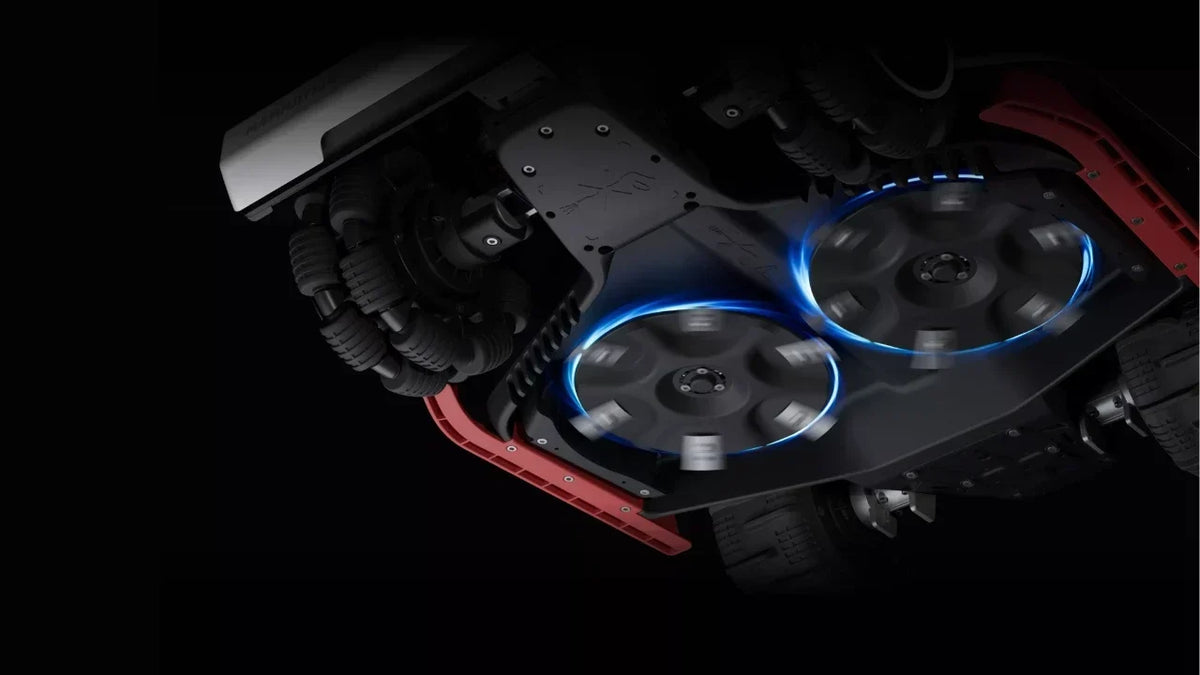
The blade is the most important consumable part of a robotic lawnmower and usually needs to be replaced every 2 to 3 months. If your lawn has a lot of pine cones, fallen fruit or other hard objects, you may need to replace the blades more often.
When the blades become dull, the lawnmower's motor is forced to work harder. This leads to increased heat generation, faster battery charging and ultimately a shorter lifespan for the entire machine. You can read the guide to robotic lawnmower blades to learn how to maintain your lawnmower blades.
What Shortens the Life of Your Robotic Lawnmower (Things to Avoid)
There are some subtle but common everyday habits that can shorten the life of your robotic lawnmower. Have you encountered any of these situations?
- The machine’s chassis has not been cleaned for a long time, which accumulates a thick layer of wet and dry grass clippings.
- Continuous use of dull, broken blades.
- Leaving the lawnmower in direct sunlight during the summer, which causes the battery to overheat while charging.
- Forgetting the robotic lawnmower outside during the winter frost.
- Turning the robotic lawnmower over without padding or any protection, which results in camera damage.
- Improper handling, which causes screws to come loose.
These habits, accumulated over time, can damage the life of your robotic lawnmower. To protect your machine, please avoid these methods.
6 tips to extend the life of your robotic lawnmower
Taking care of your robotic lawnmower doesn't have to be difficult or time-consuming. By creating a few simple routines in your everyday life, you can help your machine stay in top condition for many years to come. Here are 6 simple and effective tips to extend the life of your machine:
1. Move your robotic lawnmower inside before the frost sets in
As winter approaches, the robot will do best if it is moved into a dry, frost-free space, such as a storage room or garage. Before you put it away for the season, it is also wise to charge the battery to approximately 50–80%. This simple step protects the battery cells from so-called deep discharge, which can otherwise permanently reduce the battery's capacity.
2. Give the undercarriage a regular cleaning
When the robot mows grass in the morning dew or after a rain shower, it is easy for damp grass clippings to get stuck on the underside. If a thick layer is allowed to build up, the resistance for the blade disc increases, which in turn means that the cutting motor has to work unnecessarily hard.
By occasionally tilting the machine against a stable support, you can easily rinse or brush away the grass. If you have a robot lawn mower from Mammotion, you can use the practical cleaning stand that is often included with the purchase, which allows you to access the undercarriage in a safe and ergonomic way.

3. Replace the blades in good time
Healthy blades are the secret behind both a beautiful lawn and a durable machine. Fine and sharp blades cut the grass blades with minimal resistance.
If the blades are allowed to become dull, however, they tend to start to “tear” the grass. This not only causes the tops of the grass blades to turn brown and dry out, but it also creates a higher load on both the drive and cutting motors. If you notice a deterioration in the quality of the cut, check whether the blades need to be replaced.
4. Give the machine time to rest
Just like us humans, a robotic lawnmower also benefits from a break at regular intervals; it rarely needs to run 24/7. In fact, neither the lawn nor the mower benefits from a constant schedule without interruption.
By using the app's smart Multi-zone Management features, you can easily plan your mowing in intervals. You can also take advantage of the Off-peak Charging feature, which allows the machine to rest and charge in peace and quiet when energy consumption is at its lowest.
5. Keep the software updated
Modern robotic lawnmowers are packed with smart technology that is constantly evolving. Manufacturers regularly release new updates to the machine's software (firmware).
These updates often contain small but important optimizations for how the robot navigates around obstacles or how it handles the battery while charging. By accepting the latest updates in the app, you ensure that your lawnmower is always working as efficiently and gently as possible, which in turn extends the lifespan of the hardware automatically.
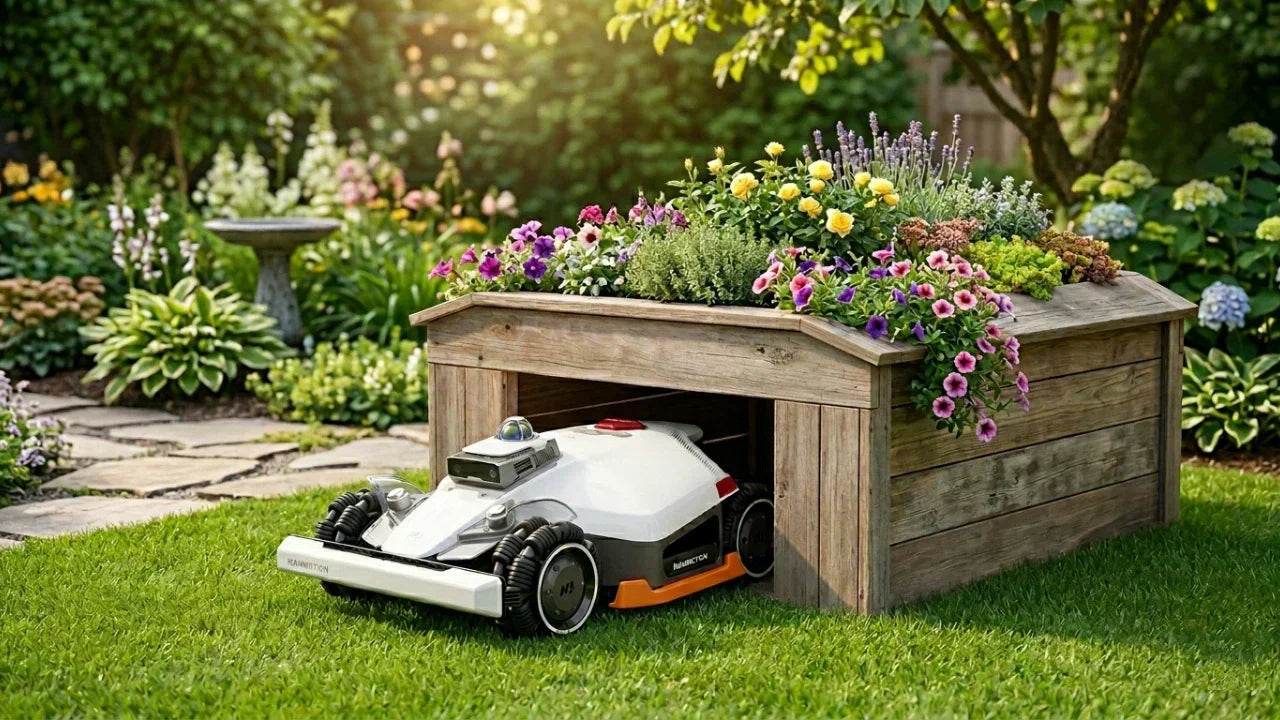
6. Build a dedicated garage for your robotic lawnmower
Robotic lawnmowers must be used outdoors, and the wheel hubs and chassis inevitably collect mud and grass clippings, making them impractical to move indoors. Leaving them outdoors exposes them to rain and sun, and they can even be damaged by falling objects. Therefore, you can build a garage for your robotic lawnmower yourself by placing the charging station and the robot inside, which is both aesthetically pleasing and provides protection.
Long-term cost analysis – Is a robotic lawnmower worth the investment
Yes, absolutely. Although the purchase price of a robotic lawnmower may seem like a big expense at first – with quality models often starting from around 900 euros and upwards – it quickly becomes a very profitable deal when you look at the long-term perspective. With an expected lifespan of up to 10 years, the actual monthly cost over time is surprisingly low.
During the machine’s life cycle, the ongoing maintenance costs are also minimal. What you need to budget for is basically just:
- Mower blades: A very cheap consumable that is replaced regularly.
- Battery replacement: A cost of under 200 euros that usually only needs to be done once every five years.
Robotic lawnmowers costs vs. Traditional lawnmowers costs
With a regular lawnmower, you certainly avoid the higher initial cost, but instead you end up with a daily life filled with recurring expenses and wear and tear. Fuel costs, annual service, oil changes and spark plugs add up quickly. Added to this is the biggest factor by far: your own time and energy. Spending several hours each week during the summer months pushing a heavy mower in front of you is both time-consuming and physically exhausting.
A modern, cordless robotic lawnmower with a lifespan of around 8 to 10 years, on the other hand, only requires a one-time investment and very easy maintenance. A high-performance robotic lawnmower usually pays for itself in just 1.5 to 2 years.
Once you have passed that threshold, you can enjoy a perfectly mowed lawn for another 6 to 8 years – a period that can be considered a net gain for both your wallet and your quality of life, financially speaking.
FAQ about the lifespan of robotic lawnmowers
1. How do you know when it’s time to change the battery?
The most obvious sign is the machine’s daily performance. If you notice that your robotic lawnmower is starting to return to the charging station more often, or if the actual mowing time per charge has become noticeably shorter (for example, if it only mows for 15-20 minutes before needing to recharge), it’s a sure sign that the battery is approaching the end of its life cycle.
2. How often should you change the battery in a robotic lawnmower?
The lifespan of a battery depends entirely on chemical aging and the number of charging cycles (normally around 300-500 cycles). In practice, for a high-quality robotic lawnmower, this means that the battery usually needs to be replaced about every three to five years.
3. How much does it cost to change the battery in a robotic lawnmower?
Buying a new original battery usually costs between 100 and 200 euros. Since the replacement itself is very easy to do yourself by simply following the steps in the product manual, there are no additional service or labor costs.
4. Can a robotic lawnmower be left outside in the rain?
Yes, high-quality premium models are built with a robust and waterproof construction (for example with an IPX6 rating), which means they can withstand being left outside and being washed off. However, the machine is best protected from the harshest weather, and it should never be left outside during the winter months when there is frost or sub-zero temperatures, as this can damage the electronics and permanently destroy the battery.
Summary
Choosing a top-quality robotic lawnmower is the best way to maximize your investment in the long term. If you feel ready to invest in a loyal and reliable gardening partner that can take care of your lawn year after year, you are welcome to explore Mammotion perimeter wire-free robotic lawnmowers. They are specially designed to handle complex terrains and challenging environments, always with a focus on outstanding durability.
Did you like this article? Add us as a preferred source to find us more easily on Google.

Leave a comment
This site is protected by hCaptcha and the hCaptcha Privacy Policy and Terms of Service apply.